You hear it in therapy offices, classrooms, and group chats, and suddenly you second-guess a word you thought you knew. Understanding dysregulated meaning shouldn’t feel like decoding a secret, and plenty of people feel unsure about it.
This guide gives you clear answers: the real meaning, correct spelling, pronunciation, everyday examples, and expert tips you can trust. Precise words matter in health, school, and work, so dysregulated meaning is worth getting right. Grab a coffee and keep reading, because the small details matter.
Quick Definition
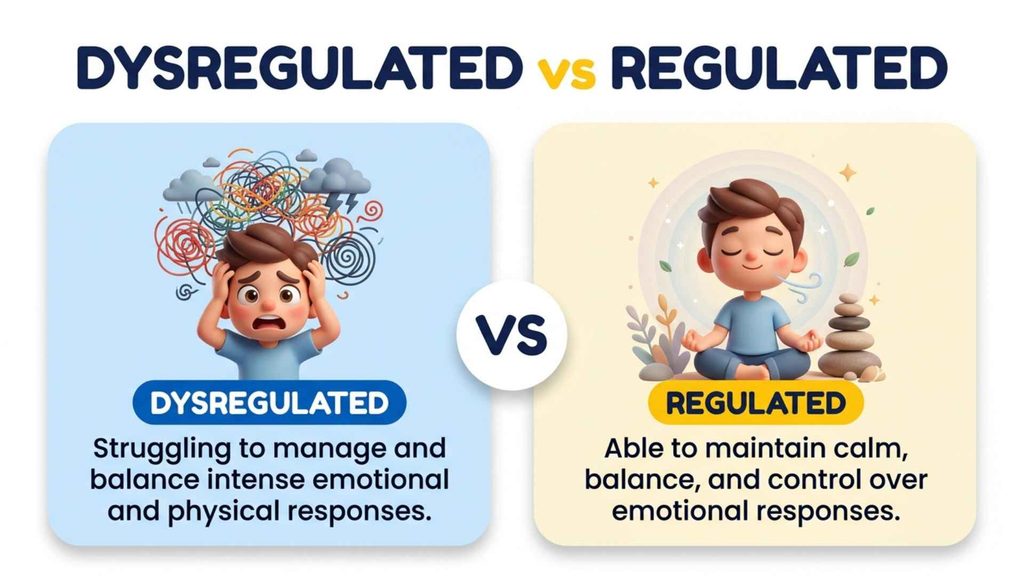
Ever read a sentence and wondered what dysregulated meaning really points to? Here is the meaning in plain words: a system whose normal control has quietly slipped out of balance.
What Is the Simple Definition of Dysregulated?
- Dysregulated is an adjective describing impaired or disturbed control.
- It can describe emotions, behavior, or body processes.
- The system still works, but its regulation is off.
- It comes from the verb dysregulate.
- Doctors, teachers, and therapists all use the term.
- The spelling with dys is the standard form.
Example in chat: Friend 1: My sleep schedule is totally dysregulated lately. Friend 2: Yeah, your body clock needs a reset.
Quick Answer
Short on time? The dysregulated meaning boils down to one spelling and one idea: use dysregulated, never the lookalike. That one choice protects your credibility and clarifies your meaning instantly.
Which Spelling Should You Use Right Now?
- Choose dysregulated in every essay, email, and report.
- The lookalike form is a misspelling, not a rival word.
- Pair it with emotional or biological nouns for clarity.
- Spell-check may miss the error, so proofread manually.
- Remember the trio: dysfunction, dysregulation, dysregulated.
Example in texting: Friend 1: Is it dysregulated or disregulated? Friend 2: Dysregulated. Think dysfunction, same weird start.
Comparison Table dysregulated vs disregulated
Which one wins when you compare them side by side? The dysregulated meaning is established and clear, while the other form adds no new meaning at all.
| Feature | Dysregulated | Disregulated |
| Status | Standard, accepted | Nonstandard spelling |
| Part of speech | Adjective | Mistaken adjective |
| Prefix | Greek dys | Latin dis |
| Typical use | Psychology, medicine, biology | Typing errors, informal posts |
| Formality | Formal and neutral | Avoid in formal work |
| Example | The immune response became dysregulated. | Replace with dysregulated. |
How Do the Two Forms Compare in Real Writing?
- Dysregulated appears in dictionaries and clinical papers.
- The other form mostly appears in casual posts.
- Editors will usually correct it without discussion.
- Both aim for the same idea, but only one is standard.
- Choosing correctly signals accuracy to readers.
- Search engines recognize the correct spelling better.
Example in chat: Friend 1: Which one goes in my paper? Friend 2: Dysregulated. The other one gets flagged every time.
Meaning and Definition
Words carry weight when someone is hurting or learning. The full dysregulated meaning covers any process that lost its balance, and understanding that meaning helps you speak about it kindly.
What Does Dysregulated Really Mean in Detail?
- It describes control that is impaired, unstable, excessive, or insufficient.
- A biological process can become dysregulated, like immune activity.
- Behavior can be called dysregulated in a psychological setting.
- It does not mean the system has stopped entirely.
- It is broader than upset or stressed.
- Context decides which kind of regulation changed.
Example in texting: Friend 1: My sister said she felt dysregulated after the argument. Friend 2: That makes sense. Emotions can get really hard to steady.
Key Differences Explained
Two words that look almost twins can still behave differently on the page. This breakdown of dysregulated meaning shows where spelling, grammar, and meaning really separate.
| Area | Dysregulated | Disregulated |
| Spelling | Starts with dys | Starts with dis |
| Grammar | Adjective, past participle | No standard grammar role |
| Pronunciation | dis-REG-yuh-lay-tid | Sounds almost identical |
| Region | Same across English varieties | Same error everywhere |
| Standing | Preferred in edited writing | Treated as a mistake |
What Are the Biggest Differences Between the Two?
- Spelling is the only visible difference.
- Standing in dictionaries is the real divide.
- Grammar works the same, but only one form is recognized.
- Sound hides the difference in speech.
- Professional writing rewards the accurate version.
- Both aim for the same idea, but one is accepted.
Example in chat: Friend 1: They sound the same, so why does it matter? Friend 2: Because on paper, only one version looks professional.
Why The Prefix Causes So Much Confusion
Ever typed a word and felt something looked slightly off? The dysregulated meaning hides inside an unfamiliar prefix, and that quirk of meaning and spelling trips up even strong writers.
| Prefix | Origin | Core idea | Familiar words |
| Dis | Latin | Separation, reversal, absence | Disagree, disconnect, disapprove |
| Dys | Greek | Difficulty, abnormality, impairment | Dysfunction, dyslexia, dysregulated |
Why Do Dis and Dys Get Mixed Up So Often?
- Dis shows up in countless everyday words.
- Dys lives mostly in medical and scientific vocabulary.
- Fast typing favors the familiar pattern.
- Similar sounds make memory unreliable.
- Prefixes are not interchangeable by meaning alone.
- Linking the word to dysfunction fixes the problem.
Example in texting: Friend 1: I always want to write dis at the start. Friend 2: Same. Just remember dysfunction and you’re good.
Which Form Is Correct?
Dictionaries settle debates better than gut feelings do. The established dysregulated meaning rests on recognized sources, which confirm the meaning and spelling used by professionals.
| Word form | Spelling | Role |
| Verb | Dysregulate | Action |
| Adjective | Dysregulated | Description |
| Present participle | Dysregulating | Ongoing action |
| Noun | Dysregulation | Condition or process |
How Do You Know the Correct Form for Sure?
- Check a trusted dictionary before publishing.
- Look at the full word family together.
- Notice that every related form uses dys.
- Trust edited sources over random social posts.
- The nonstandard form has no separate grammar.
- Use it confidently in formal writing.
Example in chat: Friend 1: Can I use disregulated in my thesis? Friend 2: No, your advisor will circle it. Use dysregulated.
Sentence Examples
Seeing a word inside a sentence makes it stick. These samples of dysregulated meaning show how the meaning shifts across emotions, behavior, and biology.
What Are Good Sentences Using Dysregulated?
- The child became emotionally dysregulated after the routine changed.
- Researchers noticed a dysregulated immune response during testing.
- She felt dysregulated after several difficult conversations.
- His behavior grew more dysregulated as stress climbed.
- A dysregulated system may react oddly to normal signals.
- The report described dysregulated hormone patterns.
- Incorrect: the patient showed a disregulated response.
Example in texting: Friend 1: Long day? Friend 2: Honestly, I feel so dysregulated. I need quiet.
Common Mistakes and Spelling Problems
Everyone slips on tricky spellings, and that’s fine. Knowing the common errors around dysregulated meaning keeps your writing sharp and your meaning crystal clear.
What Mistakes Do Writers Make With Dysregulated?
- Swapping dys for dis is the central error.
- Assuming dis means not leads writers astray.
- Spelling by sound rarely works in English.
- Copying online errors spreads them further.
- Confusing it with disorganized changes the idea.
- Skipping proofreading lets small errors survive.
Example in chat: Friend 1: I wrote disorganized instead of dysregulated, oops. Friend 2: Different words. Regulation is about control, not tidiness.
Pronunciation Guide
Saying a word out loud builds confidence fast. The sound of dysregulated meaning is simple once you break it down, and a clear meaning follows clear speech.
| Part | Sound | Note |
| dys | dis | Sounds like the familiar prefix |
| REG | reg | Main stress falls here |
| yuh | yə | Soft middle sound |
| lay | lay | Rhymes with day |
| tid | tid | Short ending |
How Do You Say Dysregulated Correctly?
- Say it as dis-REG-yuh-lay-tid slowly.
- Put the stress on the second syllable.
- Build it from dys, regulate, and ed.
- The IPA transcription is /dɪsˈrɛɡjəleɪtɪd/ in US English.
- Practice it inside a short sentence first.
- Listen to a dictionary audio clip once.
Example in texting: Friend 1: How do I say it again? Friend 2: Dis-REG-yuh-lay-tid. Stress the REG part.
Etymology and Word Origin
Every word has a family tree. The history behind dysregulated meaning runs through Greek and Latin roots, and tracing it deepens your grasp of its meaning.
| Element | Origin | Sense |
| Dys- | Greek | Bad, difficult, abnormal |
| Regulate | Latin | Direct, control, govern |
| -ed | English suffix | Past participle or adjective |
Where Does the Word Dysregulated Come From?
- Dys comes from Greek medical vocabulary.
- Regulate traces back through Latin ideas of governing.
- It is a modern formation from older parts.
- The noun dysregulation grew alongside it.
- Everyday speech now borrows it from science.
- The spelling reflects real word-building, not chance.
Example in chat: Friend 1: Why does it start with dys? Friend 2: Greek prefix meaning difficulty, same as dyslexia.
Regional Usage
Does the word change when you cross borders? The dysregulated meaning stays remarkably stable worldwide, which keeps its meaning consistent for every English reader.
| Variety | Standard Form | Notes |
| American English | Dysregulated | Common in psychology and medicine |
| British English | Dysregulated | Same spelling, same use |
| Australian English | Dysregulated | Widely used in health writing |
| Canadian English | Dysregulated | Follows the same pattern |
Does Dysregulated Change Between English Varieties?
- American writers use the same spelling.
- British usage keeps the dys prefix.
- Australian health writing follows suit.
- Canadian professionals choose the same form.
- No regional alternative exists with dis.
- Pronunciation shifts slightly, but spelling does not.
Example in texting: Friend 1: Is it spelled differently in the UK? Friend 2: Nope. Same dysregulated everywhere I’ve seen.
Grammar Rules and Part of Speech
Grammar can feel dry until it saves you from an awkward sentence. Here, dysregulated meaning meets sentence structure, and getting the grammar right protects your meaning from confusion.
| Form | Part of speech | Example |
| Dysregulate | Verb | Stress may dysregulate the system. |
| Dysregulated | Adjective | The response became dysregulated. |
| Dysregulating | Participle | Dysregulating factors were studied. |
| Dysregulation | Noun | The study examined dysregulation. |
How Do You Use Dysregulated in a Sentence?
- Use it as an adjective before a noun.
- Place it after a linking verb like became.
- Pair it with emotions, behavior, or response.
- Choose the noun form to name the condition.
- Use the verb form for causes and triggers.
- Keep the word family consistent within one paragraph.
Example in chat: Friend 1: Is dysregulated a verb? Friend 2: Dysregulate is the verb. Dysregulated is usually the adjective.
Formal And Informal Usage
Tone shapes everything we write. The dysregulated meaning works in research papers and kitchen conversations alike, and the meaning just needs the right framing for your audience.
Can You Use Dysregulated in Formal and Casual Writing?
- Formal reports welcome it when precision matters.
- Casual chats use it to describe overwhelm.
- Explain it once for a general audience.
- Avoid it when a simpler word serves better.
- Never treat it as a diagnosis by itself.
- Keep the tone respectful around mental health topics.
Example in texting: Friend 1: I felt completely dysregulated after that meeting. Friend 2: Rough. Want to take a walk and reset?
Real Life Usage Examples
Words come alive in real moments. These everyday scenes show dysregulated meaning in action, proving the meaning travels well from homes to offices to classrooms.
Where Do People Use Dysregulated in Daily Life?
- Parents describe kids upset by sudden schedule changes.
- Teachers note students struggling between activities.
- Therapists discuss emotional responses during sessions.
- Journalists report on dysregulated immune activity.
- Novelists use it for intense inner states.
- Friends use it when stress feels unmanageable.
Example in chat: Friend 1: The kids were so dysregulated after the field trip. Friend 2: Too much stimulation. Quiet time will help.
Dysregulated Meaning in Psychology and Mental Health
Psychology gives this word its most familiar home. The dysregulated meaning here centers on emotion and behavior, and a precise meaning helps people speak about struggles without shame.
| Area | How the word appears |
| Emotions | Difficulty steadying feelings |
| Behavior | Reactions that seem out of proportion |
| Stress response | Heightened or prolonged arousal |
| Sleep | Disrupted rhythm and rest |
What Does Dysregulated Mean in Mental Health Language?
- It describes trouble managing emotional intensity.
- Therapists connect it to self-regulation skills.
- It is a description, not a diagnosis.
- Triggers include stress, trauma, and sleep loss.
- Support can include therapy and coping skills.
- Reach out to a professional if it feels overwhelming.
Example in texting: Friend 1: I keep feeling emotionally dysregulated lately. Friend 2: Thanks for telling me. Maybe talk to someone who can help?
What Does Dysregulated Mean in Simple Words?
Want the easiest explanation possible? Think of the dysregulated meaning like a thermostat gone wrong, where the basic meaning is control that no longer holds steady.
Is There a Simple Way to Explain Dysregulated?
- Picture a thermostat that overheats the room.
- Or a volume knob stuck too loud.
- The machine runs, but the control is off.
- Emotions work the same way during overload.
- Bodies can do this with hormones or immunity.
- Calm routines can help restore balance.
Example in chat: Friend 1: So dysregulated means the thermostat is broken? Friend 2: Pretty much. It still runs, just not steadily.
Related And Confused Terms
Neighboring words sometimes steal the spotlight. Comparing them sharpens the dysregulated meaning and protects the meaning of each term you use in your writing.
| Term | Quick meaning |
| Dysregulation | Noun for impaired regulation |
| Regulated | Controlled within a normal range |
| Self-regulation | Managing thoughts, feelings, behavior |
| Underregulated | Too little regulation |
| Overregulated | Too much control |
| Emotional dysregulation | Trouble steadying emotional responses |
How Is Dysregulated Different From Similar Words?
- Regulated is the healthy counterpart.
- Underregulated points to insufficient control.
- Overregulated suggests excessive control.
- Disorganized means messy, not mis-regulated.
- Unstable is broader and less technical.
- Dysregulation names the broader condition.
Example in texting: Friend 1: Is overregulated the same as dysregulated? Friend 2: No, one is too much control, the other is off-balance control.
Why The Incorrect Form Feels Natural
Why does the wrong spelling look so believable? Because the dysregulated meaning is clear in our heads, but the written meaning gets hijacked by a more familiar prefix.
Why Does Disregulated Look Right to So Many People?
- Familiarity makes dis feel safer.
- Speech teaches sound, not spelling.
- Repeated exposure to errors builds false trust.
- Fast typing favors habit over accuracy.
- Learning the word by listening hides the spelling.
- Dictionary evidence is the better test.
Example in chat: Friend 1: I’ve seen disregulated everywhere, so it must be right. Friend 2: Seen often isn’t the same as correct. Check a dictionary.
Emotional Dysregulation Signs and Symptoms
Recognizing patterns can bring relief and clarity. The dysregulated meaning becomes real when you notice it in daily life, and naming its meaning is often the first step forward.
What Are Common Signs of Emotional Dysregulation?
- Intense reactions that surprise you afterward.
- Quick mood shifts within hours.
- Difficulty calming down after upsets.
- Trouble focusing during stress.
- Physical signs like a racing heart.
- Withdrawing from people when overwhelmed.
Example in texting: Friend 1: I snapped at everyone today and I don’t know why. Friend 2: Sounds like you were dysregulated. Rest and water first.
Why Do People Feel Dysregulated After Stress?
Ever crash emotionally after a hard week? The dysregulated meaning often shows up right after stress piles on, and understanding the meaning helps you respond with compassion instead of blame.
| Common trigger | Why it affects regulation |
| Poor sleep | Reduces emotional control |
| Overstimulation | Overloads the nervous system |
| Sudden change | Disrupts routine and safety |
| Hunger | Lowers patience and focus |
What Causes Someone to Become Dysregulated?
- Chronic stress wears down coping capacity.
- Lack of sleep weakens emotional control.
- Big changes disrupt familiar routines.
- Past trauma can heighten reactions.
- Overstimulation floods the nervous system.
- Some conditions make regulation harder naturally.
Example in chat: Friend 1: Why am I falling apart after finals? Friend 2: Stress and no sleep. Your body is dysregulated, give it time.
Dysregulated Synonyms and Alternatives
Sometimes another word fits the moment better. Knowing the dysregulated meaning helps you choose alternatives wisely, because each synonym shifts the meaning slightly, and precision builds trust.
What Words Can Replace Dysregulated?
- Poorly regulated works in technical writing.
- Out of balance suits casual speech.
- Disturbed fits formal descriptions.
- Unstable describes shifting patterns.
- Uncontrolled may sound harsher than intended.
- Overwhelmed captures the emotional feeling.
Example in texting: Friend 1: Can I say out of balance instead of dysregulated? Friend 2: Sure, for casual talk. Keep dysregulated for formal writing.
How Do You Calm a Dysregulated Nervous System?
Overwhelmed and unsure what helps? The dysregulated meaning points toward restoring balance, and a gentle meaning-focused approach starts with small, steady steps rather than big fixes.
| Strategy | How it helps |
| Slow breathing | Signals safety to the body |
| Movement | Releases built-up tension |
| Sleep routine | Restores emotional capacity |
| Grounding | Brings attention to the present |
What Helps Restore Calm When You Feel Dysregulated?
- Try slow breathing for a few minutes.
- Take a short walk outside.
- Use grounding by naming five things you see.
- Keep a steady sleep schedule.
- Talk with a trusted friend.
- Seek a professional if it persists.
Example in chat: Friend 1: I feel so dysregulated right now. Friend 2: Breathe with me. In for four, out for six.
Dysregulated Meaning in Medicine and Biology
Bodies need balance to work well. In science, dysregulated meaning describes systems like hormones and immunity drifting off course, and this technical meaning explains why researchers use the word so often.
How Is Dysregulated Used in Medical Writing?
- It describes immune responses that overreact or underreact.
- It can apply to hormone patterns.
- Researchers use it for cell signaling pathways.
- Metabolism can become dysregulated too.
- Context separates a description from a diagnosis.
- Always consult a clinician for health concerns.
Example in texting: Friend 1: My doctor said my cortisol was dysregulated. Friend 2: Ask them what that means for your daily routine.
Expert Editor Insight
Editors catch what spell-check misses. From an editor’s view, dysregulated meaning is really a precision issue, and clear meaning earns reader trust, especially in professional, academic, and health writing.
What Do Professional Editors Look For?
- They check the first three letters carefully.
- They confirm the context fits regulation.
- They avoid replacing the term with vague synonyms.
- They explain the term once for general readers.
- They link it with dysfunction to remember it.
- They never rely on software alone.
Example in chat: Friend 1: Spell-check didn’t flag disregulated. Friend 2: Editors still would. Always proofread that prefix.
FAQs
Is disregulated a real word?
In standard English, it is a misspelling, not a separate term. Use dysregulated meaning impaired control instead.
What does dysregulated mean?
Dysregulated meaning is control that has become impaired or disturbed. It applies to emotions, behavior, and biology.
Dysregulated vs disregulated, which is correct?
Dysregulated is the standard form. Dictionaries support this dysregulated meaning in formal writing.
How do you pronounce dysregulated?
Say dis-REG-yuh-lay-tid with stress on REG. This keeps the dysregulated meaning easy to speak.
Can dysregulated describe emotions?
Yes, it often describes trouble steadying feelings. The dysregulated meaning is descriptive, not a diagnosis.
What is a synonym for dysregulated?
Poorly regulated or out of balance often work. Each changes the dysregulated meaning slightly.
Why do people write disregulated?
The familiar dis prefix feels natural. Sound makes the dysregulated meaning easy to misspell.
Conclusion
Now you know the real dysregulated meaning: control that has slipped out of balance, from feelings to hormones. The correct spelling uses dys, and the lookalike form is simply a common mistake. Remember the dysregulated meaning whenever you proofread, and link it to dysfunction and dysregulation to keep the prefix straight. Words shape how we understand ourselves and others, so using this one carefully matters. The next time you read or write about dysregulated meaning, pause, check those first three letters, and choose with confidence. Notice the meaning behind the word, and let it guide kinder, clearer conversations.
Meta Description
Dysregulated meaning explained simply: correct spelling, pronunciation, examples, and tips to use the word with confidence in any writing.

Amelia Brooks is a US-based author known for inspiring stories on meaning, growth, and hope, blending insight with simple, engaging storytelling.