Primary and secondary terms: resilience synonym, synonym of resilience, synonyms, alternatives, other words for resilience, best alternatives
LSI and semantic synonyms: fortitude, perseverance, tenacity, grit, adaptability, hardiness, determination, strength, endurance, toughness, resistance, pluck, spunk, mettle, stoicism, indomitability, invincibility, coping ability, courage, flexibility
NLP and topical terms: bounce back, recover from setbacks, adversity, stress, inner strength, mental toughness, emotional resilience, psychological resilience, community resilience, economic resilience, build resilience, show resilience, resilience in the face of adversity, tone, formality, audience, context, register, collocations
Antonyms: fragility, vulnerability, weakness, helplessness, frailty, brittleness, rigidity, inflexibility, instability, surrender
Entities and contexts: psychology, business, education, personal development, resume, cover letter, academic writing, professional writing, creative writing, social media, American English, Angela Duckworth, American Psychological Association, Latin “resilire”
Related phrases: what does resilience mean, formal vs informal synonyms, resilience vs perseverance, resilience vs grit, resilience vs fortitude, resilience vs hardiness, opposite of resilience, how to choose the right word
Introduction
You type the word “resilience” for the third time in one paragraph, and suddenly it sounds flat. Frustrating, right? Every writer hits that wall, and a fresh resilience synonym is usually all it takes to get moving again.
This guide gives you meanings, tone tips, quick tables, and real examples drawn from school, work, and daily life so you can pick the right resilience synonym for any situation. Precise words make you sound credible, and a good synonym guide saves you from guessing. Stay with me, and your vocabulary will feel sharper and more confident by the end.
What Does Resilience Mean?
Ever wondered why people praise someone for bouncing back? That quality has a name, and understanding it first makes choosing any resilience synonym or synonym much easier and more accurate.
What Is the Simple Definition of Resilience?
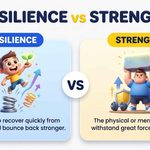
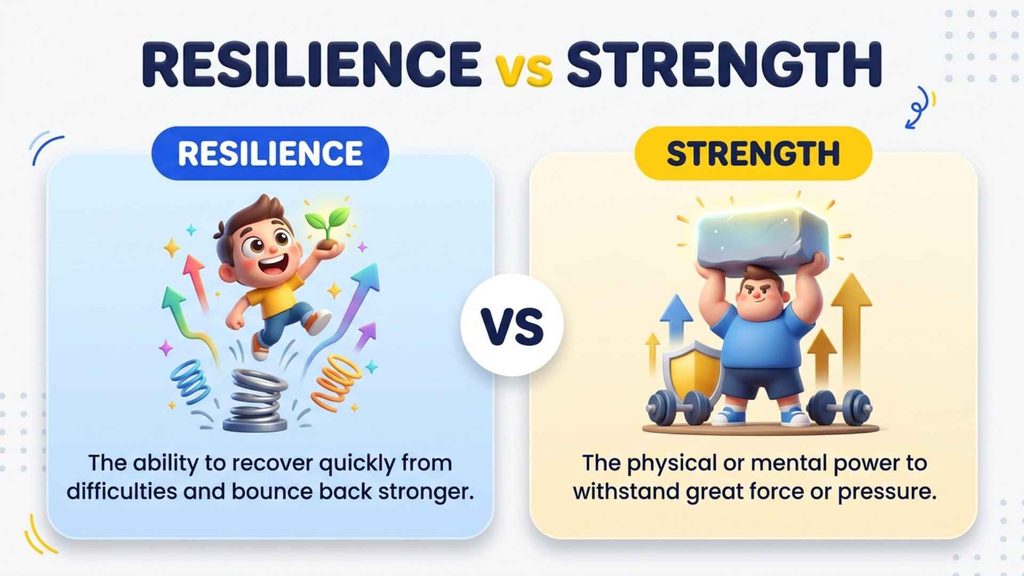
Resilience is the capacity to bounce back from adversity, stress, or change. The word comes from the Latin resilire, meaning to leap back or rebound, which explains why it feels so active and hopeful.
The American Psychological Association describes psychological resilience as adapting well when life brings trauma, tragedy, threats, or significant stress. That makes it a noun with a positive, empowering tone, neutral enough for both formal reports and casual talk.
In everyday life, resilience shows up in small moments, like finishing a hard shift or studying again after a poor grade. It is not about never feeling pain. It is about coping well, adjusting your plan, and moving forward with emotional intelligence instead of giving up.
- Noun: resilience is the base form, and resilient is the adjective.
- Tone: almost always positive, empowering, and hopeful.
- Formality: neutral, so it fits essays, resumes, and conversations.
- Fields: common in psychology, business, education, and personal growth.
- Forms: resilience, resilient, resiliently, and the rare verb resile.
- Types: emotional, physical, economic, and community resilience.
| Word Form | Part of Speech | Example |
| Resilience | Noun | “Her resilience impressed the whole team.” |
| Resilient | Adjective | “He stayed resilient during the layoffs.” |
| Resiliently | Adverb | “They rebuilt resiliently after the storm.” |
| Resile | Verb (rare) | “Few writers use resile in daily English.” |
Experience shows that readers trust writers who define a term before swapping it. Spend one sentence on what resilience truly means in your context, then introduce alternatives. That small step builds credibility and keeps readers from guessing your intent.
Example in texting: Friend 1: “Why does everyone keep calling you resilient lately?” Friend 2: “Because I bounced back fast after losing that job.”
Synonyms of Resilience
Words that mean the same thing rarely feel the same. This list shows every useful resilience synonym, so you can match each synonym to your reader and your exact purpose.
What Are the Most Common Synonyms for Resilience?
The most common options are fortitude, perseverance, tenacity, grit, adaptability, and hardiness. Each one captures a different slice of the same idea, from quiet inner strength to stubborn persistence.
Think of resilience as a family of related traits. Some words stress recovery, others stress effort, and a few stress courage. Knowing that split keeps your writing precise instead of vague.
Context also matters for word choice. A teacher might praise a student’s perseverance, a coach might admire a player’s toughness, and a manager might highlight a team’s adaptability. The idea behind each compliment is similar, yet the picture it paints in the reader’s mind is noticeably different.
- Fortitude means courage and inner strength under pressure.
- Perseverance means steady effort despite obstacles.
- Tenacity means stubborn determination to keep holding on.
- Grit means passionate persistence, usually informal.
- Adaptability means adjusting smoothly to new conditions.
- Hardiness means psychological toughness under stress.
- Endurance means lasting through long hardship.
- Toughness means simple, direct strength in everyday speech.
| Synonym | Simple Meaning | Best Used For |
| Fortitude | Courage in adversity | Formal writing |
| Perseverance | Effort despite difficulty | Resumes and essays |
| Tenacity | Determined persistence | Business communication |
| Grit | Informal courage | Casual, motivational writing |
| Adaptability | Adjusting to change | Academic writing |
| Hardiness | Toughness under stress | Psychology and workplace topics |
Writers often lump every synonym together, but a good editor sorts them by emphasis first. Ask whether you mean recovery, effort, courage, or flexibility, then pick the word that carries exactly that weight. This habit alone prevents most vague, repetitive writing.
Example in chat: Friend 1: “Need another word for resilience in my essay.” Friend 2: “Try fortitude, it sounds formal and fits your topic.”
Best Synonyms for Resilience
Nobody wants a clunky word in an important message. Here is the best resilience synonym for each situation, so every synonym you choose sounds truly confident, natural, and genuinely right.
Which Resilience Synonym Works Best in Each Situation?
No single word wins everywhere. The best resilience synonym depends on audience, tone, and purpose, which is why professionals keep a short shortlist instead of one favorite.
As a rule, pick tenacity for business, adaptability for research, and grit for friendly or motivational writing. Pair the word with a concrete detail, and it lands even harder.
Strength of meaning is another useful filter. If you want a softer touch, coping ability or flexibility keeps the tone gentle. If you want maximum drama, indomitability or invincibility raises the stakes. Choosing intensity on purpose keeps your message honest and believable.
- Tenacity suits professional writing and ambitious goals.
- Adaptability suits academic papers and change-management topics.
- Fortitude suits business communication that needs dignified strength.
- Perseverance suits resumes and cover letters.
- Grit suits casual talk and social media captions.
- Strength suits emotional, heartfelt writing.
- Indomitability suits creative writing with dramatic flair.
- Coping ability suits softer, practical descriptions.
| Context | Best Synonym | Why It Works |
| Formal writing | Fortitude | Conveys dignified inner strength |
| Academic writing | Adaptability | Fits research language |
| Professional writing | Tenacity | Sounds ambitious and focused |
| Resume | Perseverance | Shows sustained effort |
| Casual conversation | Grit | Vivid and relatable |
| Emotional writing | Strength | Simple and deeply human |
| Creative writing | Indomitability | Adds literary flair |
Hiring managers skim fast. A specific word such as perseverance, paired with a number or result, beats a vague trait every time. Specific wording earns attention, while generic wording gets skimmed and forgotten quickly.
Example in texting: Friend 1: “Which word looks best on my resume, grit or perseverance?” Friend 2: “Perseverance. Grit feels a bit casual for recruiters.”
Examples of Resilience in Sentences
Seeing a word in action beats memorizing definitions. These sentences show how a resilience synonym sounds in school, work, and daily life, so you can borrow any synonym quite freely.
How Do You Use Resilience in a Sentence?
Start with a clear subject, add the word, then show the result. Strong sentences link resilience to a real setback and a visible outcome, which makes the quality feel earned rather than claimed.
Below you will find examples for work, study, email, and social media. Swap in perseverance, tenacity, or fortitude whenever the original word repeats.
Notice how every sentence names a challenge, an action, and a result. That simple pattern works for storytelling, blogging, and professional updates alike. Readers connect with real-life examples because they see themselves in the struggle and feel motivated to keep going.
- School: “Learning a new language takes resilience and patience.”
- College: “Graduate school tested her resilience through rejection and doubt.”
- Workplace: “The team’s tenacity turned a failing project into a success.”
- Business: “Market downturns reveal a company’s resilience and adaptability.”
- Email: “I admire your fortitude throughout this demanding quarter.”
- Resume: “Demonstrated perseverance by leading three major organizational changes.”
- Social media: “Resilience looks like showing up on hard days.”
| Context | With Resilience | With a Synonym |
| Work | “Her resilience steadied the team.” | “Her fortitude steadied the team.” |
| Study | “His resilience carried him through exams.” | “His perseverance carried him through exams.” |
| “Thank you for your resilience this quarter.” | “Thank you for your determination this quarter.” | |
| Story | “The village showed resilience after the flood.” | “The village showed endurance after the flood.” |
A quick rule from years of editing: show the setback first, then the word. “After losing her funding, she showed tenacity” lands harder than praising tenacity with no story. Context turns vocabulary into proof, and proof builds reader trust. Try it in your next email and watch how much clearer your point becomes.
Example in chat: Friend 1: “Is ‘Her fortitude saved the project’ correct?” Friend 2: “Yes, and it sounds more polished than resilience.”
How to Use Resilience in Different Contexts
The same word can feel perfect in one place and awkward in another. Match your resilience synonym to the setting, and any synonym will feel natural, not stiff or forced.
How Do You Choose the Right Resilience Synonym for Your Audience?
Start with three questions: who is reading, what tone fits, and how strong should the word sound? Answer those, and the choice becomes almost automatic.
Then read your sentence aloud. If the synonym sounds forced, swap it. Spoken rhythm is the quickest test of natural language, and one every professional editor trusts.
Context shifts the best choice quickly. In psychology, hardiness has a specific meaning tied to research by Suzanne Kobasa in the late 1970s. In business, determination sounds practical. In creative writing, mettle or stoicism adds depth and mood.
- Purpose: use resilience for recovery and perseverance for ongoing effort.
- Audience: academics prefer adaptability, managers like tenacity, friends enjoy grit.
- Tone: fortitude feels formal, toughness feels casual, strength feels emotional.
- Intensity: coping ability is mild, while invincibility sounds extreme.
- Read aloud: if a word feels forced, replace it immediately.
| Setting | Recommended Word | Tone |
| Academic essay | Adaptability | Scholarly |
| Cover letter | Perseverance | Polished |
| Team meeting | Tenacity | Confident |
| Text to a friend | Grit | Relaxed |
| Public speech | Fortitude | Dignified |
Professional editors often keep a personal shortlist of three or four words per audience. It saves time, prevents repetition, and ensures every term has been tested aloud. Try building yours after reading this guide. Revisit and update it every few months as your writing needs change.
Example in chat: Friend 1: “Would ‘invincibility’ work in my cover letter?” Friend 2: “Too strong. Try determination so you sound confident, not boastful.”
Formal and Informal Synonyms of Resilience
Formal or friendly, every reader expects a certain voice. Sort each resilience synonym by register, and your final synonym choice will always match the room you are truly writing for.
What Are the Formal and Informal Synonyms for Resilience?
Formal words like fortitude, stoicism, and indomitability suit reports, speeches, and academic work. Informal words like grit, pluck, and spunk belong in chats, captions, and motivational posts.
Slang deserves caution. Grit crosses into professional writing, thanks largely to psychologist Angela Duckworth, while spunk and pluck still feel old-fashioned or playful.
Think of the choice as a volume dial. Formal vocabulary speaks softly and carries authority, while informal vocabulary speaks warmly and builds connection. Neither is better. The right one simply matches your audience, platform, and purpose at that moment.
- Fortitude works in speeches, reports, and formal letters.
- Stoicism fits reflective essays about calm endurance.
- Perseverance works both formally and on resumes.
- Grit works in motivational and many professional settings.
- Toughness fits everyday speech and sports talk.
- Pluck feels charming and slightly old-fashioned.
- Spunk is playful, so avoid it in formal writing.
| Register | Synonyms | Where to Use Them |
| Formal | Fortitude, stoicism, indomitability | Reports and speeches |
| Neutral | Perseverance, determination | Resumes and emails |
| Informal | Grit, toughness | Chats and captions |
| Playful | Pluck, spunk | Stories and casual talk |
Register matters more than most writers realize. A single casual word in a formal report can undermine authority, while a stiff word in a friendly note can sound cold. When unsure, choose a neutral option like perseverance. Neutral words rarely offend and almost always work.
Example in texting: Friend 1: “Can I say my sister has spunk in my wedding toast?” Friend 2: “Sure, spunk is playful. Use fortitude for the serious parts.”
Antonyms of Resilience
Knowing the opposite sharpens your sense of it. These antonyms show what happens when strength fades, making any resilience synonym you pick feel more precise and every synonym more meaningful.
What Is the Opposite of Resilience?
The most direct opposite is fragility, the tendency to break under pressure. Others include vulnerability, weakness, helplessness, and frailty, each emphasizing a different kind of struggle.
Antonyms help in contrast writing. A line like “fragile systems collapse, resilient ones adapt” makes your point faster than a paragraph of explanation.
Notice too that antonyms are not always negative judgments. Sensitivity or delicacy can describe a quality rather than a flaw, depending on the situation. Always check the context before using a word that might sound harsh or unfairly critical.
- Fragility means easily broken or damaged.
- Vulnerability means open to harm or attack.
- Weakness means a lack of strength or ability.
- Helplessness means being unable to help oneself.
- Rigidity means stiff and unable to adapt.
- Instability means not steady or dependable.
- Surrender means giving up under pressure.
| Antonym | Meaning | Example |
| Fragility | Easily broken | “The economy’s fragility showed during the crisis.” |
| Vulnerability | Open to harm | “His vulnerability made stress harder to manage.” |
| Rigidity | Unable to adapt | “Rigidity blocked every new idea.” |
| Surrender | Giving up | “Surrender was never her style.” |
Contrast is a classic writing technique. Pairing resilience with fragility in one sentence sets up an instant before-and-after picture, which is why leaders and journalists use it so often in speeches and analysis. It also keeps readers engaged from start to finish.
Example in chat: Friend 1: “What’s the opposite of resilient?” Friend 2: “Fragile, or vulnerable if you mean easily hurt.”
Common Phrases and Expressions With Resilience
Certain phrases show up again and again around this powerful word. Learn them, and each resilience synonym will slot easily into real sentences while your overall synonym vocabulary grows naturally.
What Are Common Phrases With Resilience?
Phrases like build resilience, show resilience, and emotional resilience appear in therapy, leadership, and education writing. Each has a close substitute that keeps your sentences fresh.
Collocations matter for natural language. Readers sense when a pairing sounds off, so always test a swap inside the full phrase.
Each phrase also hints at a different stage of recovery. Building happens before a crisis, showing happens during it, and testing describes the pressure itself. Choosing the phrase that fits the stage makes your writing feel thoughtful and trustworthy to every reader.
- Show resilience means demonstrate the ability to recover.
- Build resilience means develop the capacity to withstand stress.
- Emotional resilience means coping well with feelings and challenges.
- Resilience in the face of adversity means staying strong against difficulty.
- Test your resilience means challenge someone’s ability to handle pressure.
- Resilience and determination pairs recovery with focus.
| Phrase | Swap-In Version |
| Show resilience | Show fortitude |
| Build resilience | Build hardiness |
| Emotional resilience | Emotional strength |
| Resilience in the face of | Perseverance in the face of |
| Test your resilience | Test your tenacity |
Collocations are the glue of natural English. Native speakers rarely say “make resilience” or “do resilience.” They say build or show it. Learning these pairings makes your swaps sound effortless. Practice them aloud a few times and they become automatic.
Example in texting: Friend 1: “Any tips to build resilience before exams?” Friend 2: “Sleep well, move daily, and build hardiness one small win at a time.”
Common Mistakes to Avoid With a Resilience Synonym
Even confident writers slip here. Spot these mistakes early, and your chosen resilience synonym will always sound sharp, because a careless synonym can quietly change the meaning of a sentence.
What Mistakes Do People Make With Resilience Synonyms?
Most errors come from treating every word as interchangeable. They are not. Grit, fortitude, and adaptability each carry a different shade, and swapping them blindly weakens your message.
Another common slip is repetition. Using one word three times in a paragraph tires the reader, while smart variation keeps the writing alive.
Context errors are the sneakiest ones. A software program adjusts to change, so adaptability fits better than resilience. A weightlifter shows physical strength, not recovery. Pausing to ask what the subject actually does solves most of these slips immediately.
- Confusing resilience with perseverance changes the meaning of your sentence.
- Using grit in formal research can sound too casual.
- Choosing vague words like strength hides the specific quality.
- Mixing up adaptability and resilience when describing software or systems.
- Repeating one word endlessly makes writing feel flat.
- Applying resilience to physical lifting, where strength fits better.
| Mistake | Weak Version | Better Version |
| Wrong focus | “His resilience to finish the race” | “His perseverance to finish the race” |
| Too casual | “The study measured grit in seniors” | “The study measured resilience in seniors” |
| Too vague | “She showed strength making dinner” | “She showed resilience rebuilding her career” |
| Wrong context | “Resilience helped him lift 300 pounds” | “Strength helped him lift 300 pounds” |
The fastest fix is a two-pass edit. First, check meaning: does the word describe recovery, effort, or courage? Second, check tone: does it match the audience? Most errors disappear after those two quick passes. Reading aloud adds a third check that catches awkward phrasing.
Example in chat: Friend 1: “I wrote ‘resilience lifted the weights.’ Fine?” Friend 2: “Use strength there. Resilience is about recovery, not muscle.”
Is Grit a Good Resilience Synonym?
Grit is everywhere online, but is it truly the same thing? Let us check whether it really works as a resilience synonym, and when another synonym serves you much better.
What Is the Difference Between Grit and Resilience?
Grit blends passion with long-term persistence toward a goal, an idea popularized by Angela Duckworth’s research and her 2016 book. Resilience focuses on recovering after something knocks you down.
So grit is close, not identical. Use it when you want energy and attitude, and keep resilience when you want a calm, professional voice.
Popular culture blurs the line even further. Motivational posts use grit and resilience interchangeably, which is fine for social media. In academic writing or a performance review, though, a precise choice protects your credibility and shows careful thinking.
- Grit emphasizes passion and persistence toward long-term goals.
- Resilience emphasizes recovery after setbacks and stress.
- Tone differs: grit is informal, resilience is neutral.
- Intensity is usually higher with grit, which feels more passionate.
- Best swap happens in motivational or casual writing.
- Avoid grit in clinical or scholarly research papers.
| Feature | Grit | Resilience |
| Core idea | Passionate persistence | Bouncing back |
| Tone | Informal and vivid | Neutral and professional |
| Best use | Motivation and captions | Reports and resumes |
| Example | “It takes grit to launch a startup.” | “Her resilience helped her recover.” |
In psychology, grit and resilience are studied as separate traits that often travel together. Someone can show real grit chasing a goal yet still need support recovering from a major setback. Treat them as partners, not twins.
Example in texting: Friend 1: “Is grit the same as resilience?” Friend 2: “Close. Grit pushes forward, resilience helps you recover after you fall.”
What Is Another Word for Resilience on a Resume?
Recruiters read hundreds of resumes every week, so every single word counts. Pick a sharp, honest resilience synonym, and your synonym choice will signal real results rather than empty buzzwords.
Which Resilience Synonym Looks Best on a Resume?
Perseverance, tenacity, and determination top the list because they imply action and measurable results. “Resilient” alone is a soft claim, but proof turns it into evidence.
Always attach a number: how many projects, how many months, what outcome. That small habit shows experience and trustworthiness, two things hiring managers actually look for.
Applicant tracking systems also scan for keywords such as leadership, adaptability, and perseverance. Mirroring the job description honestly helps your resume pass the first filter, and a real story then helps it impress the human reader who follows.
- Perseverance signals sustained effort across long projects.
- Tenacity signals persistence in competitive, goal-driven roles.
- Determination signals firm focus and reliable follow-through.
- Adaptability signals comfort with change and shifting priorities.
- Flexibility signals teamwork and openness to new methods.
- Quantify results next to every trait you claim.
| Weak Line | Stronger Line |
| “Resilient worker” | “Demonstrated perseverance across five concurrent projects.” |
| “Never gives up” | “Showed tenacity closing a stalled client renewal.” |
| “Handles change” | “Applied adaptability during a company-wide restructure.” |
Hiring teams scan for evidence, not adjectives. A short result next to your chosen trait, such as saved hours, closed deals, or delivered projects, turns a buzzword into a believable story.
Example in chat: Friend 1: “Should I write ‘resilient’ on my resume?” Friend 2: “Use perseverance plus a result, like finishing five projects on time.”
What Is the Difference Between Resilience and Perseverance?
People mix these two words up constantly. Compare them side by side here, and your resilience synonym choice, along with every other synonym, becomes far clearer and much more confident.
How Do Resilience and Perseverance Differ in Meaning?
Resilience looks backward at recovery after a fall. Perseverance looks forward at steady effort toward a goal. Both are positive, yet they answer different questions.
Add tenacity and fortitude, and the family grows: tenacity is stubborn holding on, while fortitude is courage in hard moments.
Many learners ask which word sounds stronger. Neither wins automatically. Perseverance feels longer and steadier, while resilience feels sharper and more personal. Pair them in one sentence, such as “her resilience and perseverance carried the project,” when you want both ideas together.
- Resilience focuses on recovery after setbacks.
- Perseverance focuses on continued effort toward goals.
- Tenacity implies stubborn refusal to quit.
- Fortitude implies courage and moral strength.
- Adaptability implies adjusting to new conditions.
- Choose resilience after a failure, perseverance during long effort.
| Word | Main Idea | Example |
| Resilience | Bouncing back | “Her resilience helped her recover from failure.” |
| Perseverance | Continuing forward | “His perseverance finally led to success.” |
| Tenacity | Stubborn determination | “She held on with tenacity.” |
| Fortitude | Inner courage | “He faced criticism with fortitude.” |
A simple memory trick: resilience is the rebound, perseverance is the climb. Picture a ball bouncing back versus a hiker moving steadily uphill. That image makes the right choice obvious in seconds. Visual memory tricks like this one stick far longer than definitions.
Example in texting: Friend 1: “Which one fits after a failed exam, resilience or perseverance?” Friend 2: “Resilience for bouncing back, perseverance for studying again every night.”
Frequently Asked Questions About Resilience
What is the best resilience synonym?
The best resilience synonym depends on context. Tenacity suits business, fortitude suits formal writing, and grit suits casual talk.
What is a formal resilience synonym?
Fortitude and perseverance are strong formal choices for a resilience synonym. Both fit reports, speeches, and academic papers.
What is an informal resilience synonym?
Grit and toughness are friendly picks for an informal resilience synonym. They suit chats, captions, and motivational posts.
What is another word for resilience in professional writing?
A professional resilience synonym like tenacity or determination sounds polished. Both show reliable workplace qualities.
What is the difference between resilience and perseverance?
Resilience means recovering after setbacks, while perseverance means continuing effort. Each resilience synonym carries a slightly different focus.
What is the opposite of resilience?
The closest opposite is fragility, followed by vulnerability and weakness. Knowing antonyms helps you choose a resilience synonym wisely.
Can I use grit as a resilience synonym on a resume?
Yes, though perseverance sounds more polished as a resilience synonym on a resume. Save grit for casual or motivational writing.
Conclusion
Choosing the right resilience synonym is less about fancy vocabulary and more about honest clarity. Resilience itself describes the human ability to recover, adapt, and keep going, but words like fortitude, perseverance, tenacity, and grit each add a different shade of meaning. Match the word to your audience, your tone, and your purpose, then read it aloud to make sure it sounds like you. Whether you are polishing a cover letter, writing an essay, or sending a supportive text, the best resilience synonym is the one that fits the moment. Keep this synonym guide handy, practice with one new word each week, and notice how your writing grows stronger. Small, deliberate choices like these build trust with readers and make every message clearer. Your next sentence deserves the perfect resilience synonym.

Amelia Brooks is a US-based author known for inspiring stories on meaning, growth, and hope, blending insight with simple, engaging storytelling.