
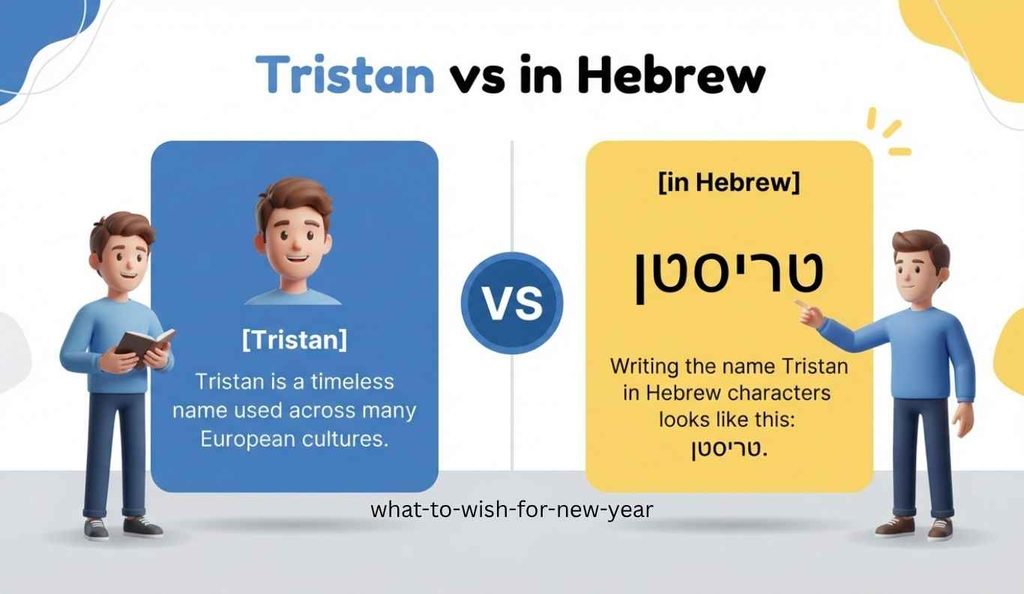
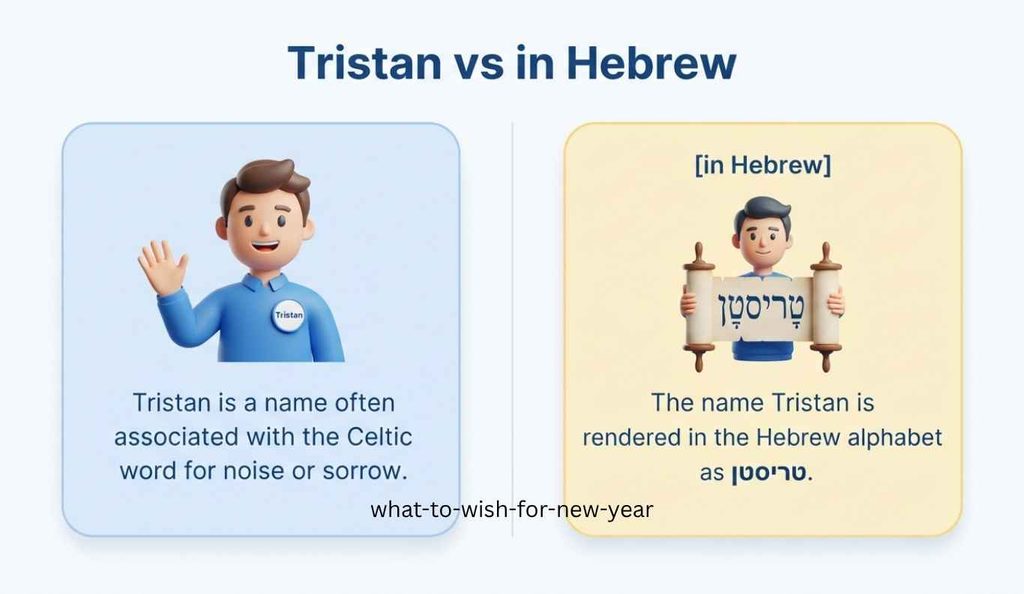
Have you ever fallen for a name, then wondered whether it fits your faith or heritage? Many parents search for Tristan name meaning in Hebrew hoping to find a sacred root behind it.
The honest answer is more interesting than a simple yes or no. This guide covers the real origin, whether the Bible mentions it, what the name symbolizes, and Hebrew names with a similar spirit. Whatever you decide, you’ll know exactly what you’re choosing. Let’s start with the facts.
Tristan Profile Summary
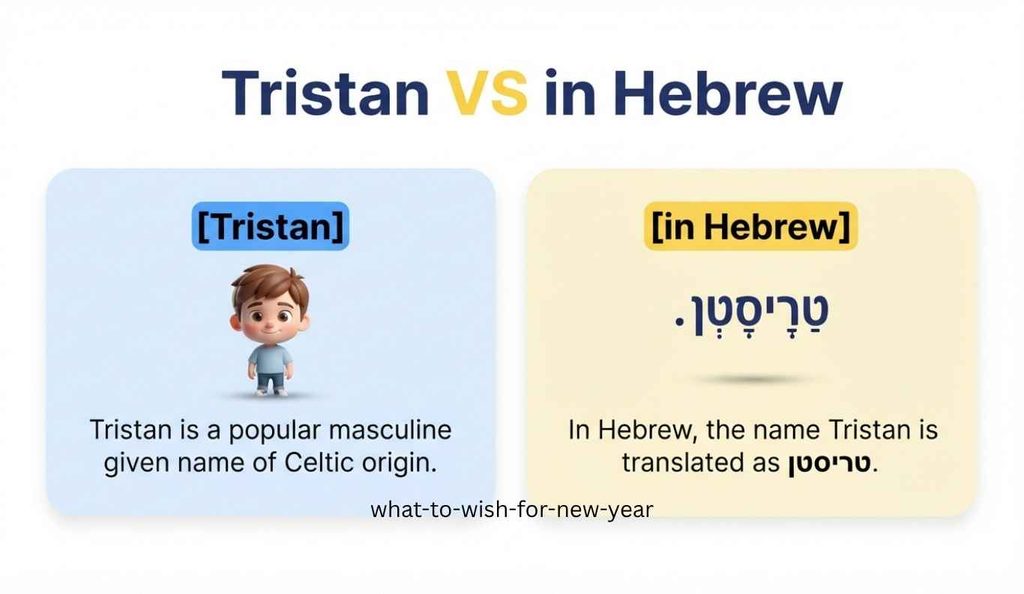
Tristan is a masculine given name with deep Celtic roots and a long literary life. It has no native Hebrew meaning, but families often look for spiritual parallels anyway.
| Detail | Information |
| Name | Tristan (also Tristram, Tristen, Tristin) |
| Gender | Male |
| Origin | Celtic (Brythonic/Pictish), shaped by Old French |
| Root | Drustan, from Drust |
| Popular meaning | Tumult, riot, or “sorrowful” (folk etymology) |
| Hebrew origin | None |
| Hebrew spelling | טריסטן (transliteration only) |
Tristan Bio / Wiki
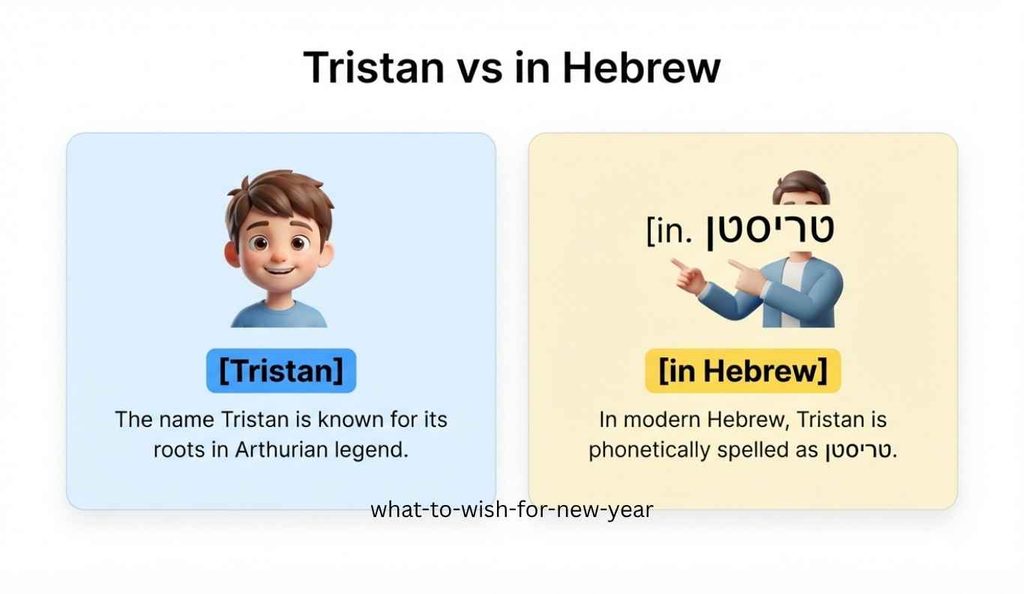
The name first appears in medieval Arthurian legend, where Tristan and Iseult became one of Europe’s most famous tragic romances. The hero was a knight of Cornwall, nephew of King Mark.
Behind the legend sits an older Pictish name, Drust or Drustan, borne by real early medieval figures. Over centuries the spelling drifted through Old French into the forms we use today. Writers also linked it to the French triste (sad), which is why “sorrowful” became attached to the name.
Tristan Name Meaning in Hebrew & Date of Birth
Searching Tristan name meaning in Hebrew returns mostly transliterations, not translations. In Hebrew script the name is simply spelled out phonetically, the way any foreign name would be. It carries no Hebrew root word.
As for a “date of birth,” names don’t have one, but Tristan’s earliest recorded roots reach the early medieval period. The legend was written down in the 12th century.
- Hebrew writes Tristan phonetically, without any root or meaning behind it.
- The name’s oldest known forms are Pictish, not Semitic.
- The “sad” meaning comes through French and Latin, not Hebrew.
- Some websites list a Hebrew meaning, but no reliable etymology supports it.
Early Life and Education
A name’s “early life” is its history of use. Tristan stayed mostly a literary and noble name for centuries, popular among writers, knights, and aristocratic families.
Its education into modern culture came through opera and poetry. Wagner’s Tristan und Isolde and later novels and films kept it alive. By the late 20th century it moved into everyday use as a stylish, romantic boy name.
Tristan Career Journey
Tristan’s journey from legend to nursery is a long one. It moved from Celtic oral tradition to French romance, then to English literature, and finally to modern baby-name lists across the English-speaking world.
Rise to Fame
The name rose through Tristan and Iseult, retold by poets in France, Germany, and Britain. Each retelling widened its reach, giving the name a romantic, adventurous image.
Major Achievements
Its biggest achievement is staying power. Few medieval names remain this recognizable. It also crossed languages easily, appearing as Tristram in English and Tristán in Spanish.
Is Tristan Mentioned in the Bible?
No. Tristan does not appear in the Bible, in either the Old or New Testament. The Hebrew Bible contains only Hebrew, Aramaic, and a few borrowed names, and Tristan isn’t among them.
That doesn’t make it a bad name, and it doesn’t make it “unbiblical” in a harmful sense. Many beloved Christian names, such as Charles, Grace, and Patrick, are also absent from Scripture.
The Hebrew Meaning and Origin of the Name Tristan
Since there is no Hebrew origin, the true answer is: Tristan has no Hebrew meaning. Its roots are Celtic, likely from Drust, associated with “tumult” or “riot,” then reshaped by the Latin tristis (“sad”) in French.
| Language | Form | Meaning |
| Pictish/Brythonic | Drustan | Tumult, uproar |
| Old French | Tristan | Linked to “sad” |
| Latin | tristis | Sorrowful |
| Hebrew | טריסטן | Phonetic spelling only |
If you want a true Hebrew name with a related idea, Ben-oni (“son of my sorrow”) appears in Genesis 35, though Jacob renamed him Benjamin, “son of my right hand.” That story is a lovely illustration of sorrow turned into blessing.
Tristan Origin
The Tristan name origin is Celtic, most likely from Cornwall, Wales, and Scotland’s Pictish lands. It traveled to France with Breton storytellers and then across Europe.
Its later “sad” meaning is a poetic layer, not the original one. Etymologists generally treat the “tumult” root as the earliest and the “sorrow” reading as a medieval reinterpretation. This is worth knowing if you see confident claims online.
Tristan Pronunciation
In English, Tristan is pronounced TRIS-tən (or TRIS-tin). In Hebrew speech it would sound close to “Tris-tan,” with a rolled or soft r depending on the speaker.
- The stress falls on the first syllable in English.
- The a is soft, almost like “uh.”
- French speakers say “Tree-STAHN,” with a nasal ending.
- Spellings like Tristen and Tristin sound identical in English.
Bible Verses That Reflect Tristan’s Meaning
No verse names Tristan, but the “sorrow turned to joy” theme in the popular folk meaning has strong biblical echoes.
- Psalm 30:5: sorrow may last for the night, but joy arrives with morning.
- Psalm 34:18: the Lord is near to the brokenhearted.
- Isaiah 61:3: gladness replaces mourning for those who grieve.
- Joshua 1:9: be strong and courageous, for God is with you.
These passages give a hopeful lens if you love the name but want a scriptural anchor.
Biblical and Spiritual Significance of Tristan in Hebrew
Spiritually, Tristan carries no assigned meaning in Hebrew tradition. Its significance comes from what a family chooses to pour into it: resilience, faith through hardship, and hope.
Some parents pair it with a Hebrew middle name to give it that grounding. Examples include Gavriel (“God is my strength”), Uriel (“God is my light”), and Elan (“tree”). This blends heritage with the name you love.
Is It a Good Christian Name?
Yes, plenty of Christian families use it. Scripture doesn’t require biblical names, and Tristan is not tied to any pagan deity. Many saints and believers carry non-biblical names.
The one caution is the legend. Tristan and Iseult’s love story involves adultery, which is why some conservative families hesitate. Others simply see it as a literary name with no religious weight.
| Consideration | View |
| Biblical name | No |
| Pagan or occult link | No |
| Legend concern | Adulterous romance |
| Overall | Acceptable to most Christian families |
Tristan in Legends vs Christian Truth
The legend tells of a knight and a queen bound by a love potion, ending in tragedy. It celebrates passion over covenant, which sits uneasily with biblical teaching on faithfulness.
Christian truth offers a different story: love shown through commitment, sacrifice, and loyalty. If you like the name, you can honor the courage of the character while choosing the values of Scripture. A name is a starting point, not a destiny.
Tristan Name Symbolism and Interpretation in Hebrew Culture
In Hebrew culture, names traditionally carry meaning and often reflect a parent’s prayer. Tristan, being foreign, doesn’t fit that pattern naturally, but it can still symbolize resilience through sorrow.
Jewish families sometimes give a secular name alongside a Hebrew one used in synagogue. Tristan could serve as the everyday name, paired with a Hebrew name like Yonatan (“God has given”) or Daniel (“God is my judge”).
| Hebrew name | Meaning | Feeling it shares with Tristan |
| Gavriel | God is my strength | Courage |
| Ben-oni | Son of my sorrow | Sorrow theme |
| Nechemya | God comforts | Healing from grief |
| Yehoshua | God saves | Hope |
Is Tristan a Popular Boy Name Today?
Yes, it remains a well-liked choice in the US, UK, and Canada. It sounds strong, romantic, and a little adventurous, which appeals to many parents.
Variants such as Tristen and Tristin are also common, though the classic spelling is usually seen as the most timeless.
What Are Good Hebrew Alternatives to Tristan?
If you want a name with real Hebrew roots and a similar sound or feel, consider these:
- Tobias / Tuviah: “God is good,” a warm biblical name.
- Tristan-like sound, Tziyon: meaning “Zion,” with a soft, strong feel.
- Gavriel: “God is my strength,” a bold biblical option.
- Nechemya: “God comforts,” fitting for the sorrow-to-comfort theme.
FAQs
What is the Tristan name meaning in Hebrew?
There is no Hebrew meaning. The Tristan name meaning in Hebrew is only a phonetic spelling of a Celtic name.
Is Tristan a Hebrew name?
No. Discussions of Tristan name meaning in Hebrew confirm it is Celtic, not Semitic, with French and Latin influence.
Is Tristan in the Bible?
No. When asking about Tristan name meaning in Hebrew, note that Scripture never mentions the name.
What does Tristan mean originally?
Its earliest root is Pictish Drustan, tied to “tumult.” Any Tristan name meaning in Hebrew claim is a modern guess.
Is Tristan a good Christian name?
Yes, most families accept it. The Tristan name meaning in Hebrew question doesn’t affect its suitability as a Christian name.
How do you write Tristan in Hebrew?
It’s written טריסטן. This spelling reflects sound only, not a Tristan name meaning in Hebrew root.
What Hebrew name is similar to Tristan?
Gavriel and Nechemya share similar themes. Neither replaces the Tristan name meaning in Hebrew search, but both offer real roots.
Conclusion
The truth about Tristan name meaning in Hebrew is simple: the name is Celtic, not Hebrew, and the Bible never mentions it. But that doesn’t make it a poor choice. Its history, its poetic link to sorrow and resilience, and its wide use make it a meaningful name. If Tristan name meaning in Hebrew matters to your family, pair it with a Hebrew middle name for a real spiritual anchor. Whatever you choose, remember that the Meaning in Hebrew of any name matters less than the faith and love you raise the child with. Pick the name, then pray over it.

Amelia Brooks is a US-based author known for inspiring stories on meaning, growth, and hope, blending insight with simple, engaging storytelling.