You’re halfway through a K-drama episode when a character snaps, the room goes silent, and the subtitle shows something oddly gentle. Your gut says it was far harsher. That nagging curiosity is exactly why people search for shibal meaning late at night.
This guide gives you the real meaning behind 씨발, how it sounds, where it shows up, and why Koreans treat it so seriously. You’ll also get examples, milder alternatives, and clear rules for staying respectful. Understanding shibal meaning helps you decode shows, songs, and chats without embarrassing slips. Keep reading, because the details matter.
shibal meaning in korean
Hearing a sudden outburst in a Korean scene can leave you curious and a little nervous. The shibal meaning in Korean is blunt, and the real meaning carries heavy emotion.
What Does Shibal Mean in Korean Hangul?
- Written in Hangul as 씨발, usually romanized as shibal or ssibal.
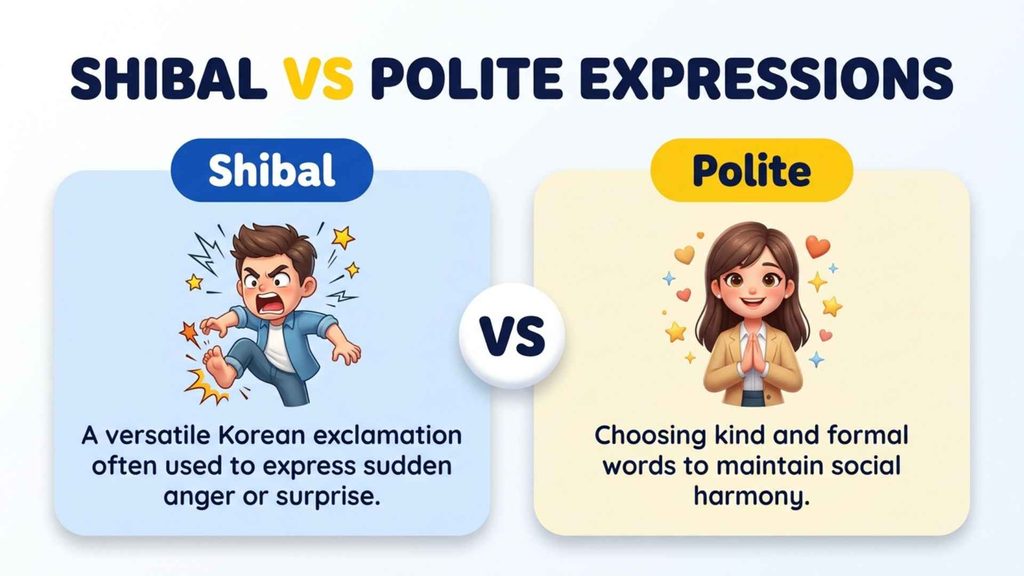
- It is a vulgar swear word, not polite or neutral speech.
- Speakers use it to show anger, shock, or sharp frustration.
- The closest English matches are the f-word and “damn it.”
- It is not an acronym, so it has no hidden full form.
- Korean learners should recognize it, not copy it.
| Form | Hangul | Note |
| Standard romanization | 씨발 (ssibal) | Closest to the Korean sound |
| Popular spelling | shibal | Common online and in subtitles |
| Short spelling | sibal | Easily confused with another word |
| Stretched spelling | shibbal | Seen in fan comments |
Korean has a long tradition of honorifics and polite speech levels, so a harsh expletive stands out sharply. That contrast explains why one short word can silence a room. When native speakers say it, they are usually venting, not teaching, which is why subtitles often soften what you actually hear.
Example in texting: Friend 1: My Korean teacher says shibal is pure profanity. Friend 2: Wow, so it’s not slang for “oh no”?
shibal korean pronunciation
Sounding out a word feels exciting until you realize one wrong tone changes everything. Here is how the shibal meaning connects to its sound, so the meaning never gets lost.
How Do You Pronounce Shibal in Korean?
- Say it roughly as shee-bal, with two short syllables.
- The first sound is tense, made with firm pressure in the mouth.
- Stress both syllables evenly, without a heavy English accent.
- The “sh” sound appears because 씨 is followed by the vowel “i”.
- Listen to native audio before trying any Korean word.
- A careless accent can change how others hear you.
| Syllable | Hangul | Sound |
| First | 씨 | shee (tense) |
| Second | 발 | bal (like “bahl”) |
Because Hangul is phonetic, the romanization shifts between ssibal, shibal, and sibal. None of these spellings captures the tense consonant perfectly. If you’re learning Korean, a short audio clip from a trusted dictionary teaches more than any English spelling, and it helps you recognize the word instantly in fast speech.
Example in chat: Friend 1: Is it “see-ball” or “shee-bahl”? Friend 2: Closer to shee-bahl, but please don’t practice it out loud at work.
What Does Shibal Mean?
That one sharp word can turn a calm scene upside down. Understanding the shibal meaning starts with its job as a pure emotional outburst, and that meaning shifts with tone.
What Does Shibal Mean in Simple Words?
- It is a Korean expletive used when emotions run high.
- People say it after mistakes, bad news, or sudden pain.
- Meaning changes with tone, volume, and the speaker’s relationship.
- In anger, it works like a sharp English curse.
- In shock, it can be a surprised reaction instead.
- Between close friends, it may sound casual, but still crude.
- Strangers usually hear it as hostile.
At its core, the word is an intensifier for negative feeling. The speaker is not describing anything literal; they are releasing pressure. That is why a dropped phone, a missed train, or a lost game can all trigger it, and why the shibal meaning depends on context far more than any dictionary line can show.
Learners sometimes ask whether the word ever sounds friendly. Among very close friends it can feel like shared frustration, yet the line between bonding and offense is thin. Because you cannot always read a listener’s comfort level, native speakers tend to hold back around anyone they do not know well, and learners are wise to copy that restraint.
Example in texting: Friend 1: He yelled shibal when the bus left without him. Friend 2: So basically “ugh, seriously?!” but way harsher.
What Is the Meaning of Shibal in Korean?
Dictionaries give one line, but real speech gives layers. The true shibal meaning in Korean mixes anger, shock, and frustration, and that emotional meaning depends on exactly who is speaking.
Is There a Hidden Full Form or Origin Behind Shibal?
- Shibal has no full form because it is not an acronym.
- It is a romanized spelling of the Korean swear word 씨발.
- Linguists debate its etymology, often linking it to sexual terms.
- Today the literal roots matter little; the emotion matters most.
- Native speakers treat it as a taboo word.
- Standard dictionaries usually label it vulgar.
Searchers often type “shibal full form” expecting something like LOL or BRB. That doesn’t apply here. The word is an ordinary Korean curse, and its history runs through spoken language rather than text slang. The National Institute of Korean Language documents standard Korean and generally discourages profanity in formal settings, which matches everyday social norms.
Example in chat: Friend 1: Does shibal stand for something, like OMG? Friend 2: Nope, it’s not an acronym. It’s just a swear word.
Shibal Meaning in English
Translating a curse never feels exact, and that’s the fun and the frustration. Here is the shibal meaning in English, along with the real meaning subtitles often hide from viewers.
What Is Shibal in English Slang Terms?
- The strongest match is the f-word, depending on the sentence.
- Milder uses translate as “damn” or “shit.”
- Subtitles often soften it to “damn” or “crap.”
- Tone decides which English equivalent fits best.
- Delivered at a person, it reads as a direct insult.
- Never treat it as a harmless loanword.
| Situation | Likely English equivalent | Intensity |
| Dropping a phone | Damn it / shit | High |
| Road rage | F-word level curse | Very high |
| Shocking news | “What the hell?” or stronger | High |
| Subtitled TV | Damn / crap | Softened |
English has no perfect twin, so translators pick words by scene. A drama may show “damn” on screen while the actor spits something far harsher. Comparing the audio with the subtitles is a quick way to train your ear and understand how much tone is being flattened.
Example in texting: Friend 1: Subtitle said “crap” but he screamed shibal. Friend 2: Yeah, translators soften it. It’s way closer to the f-word.
What Does Shibal Mean in Korean Slang?
Slang moves fast, and young speakers keep bending words until nobody remembers the original form. Still, the shibal meaning stays harsh today, and its slang meaning never really became playful.
How Do Young Koreans Use Shibal as Slang?
- Teens and adults use it as a pressure valve among peers.
- Online, it spreads through gaming chats and comment sections.
- Some speakers shorten or disguise it to dodge filters.
- Euphemisms like aish (아이씨) soften the sound but keep the hint.
- Using it casually still carries social risk.
- Older generations often dislike hearing it from the young.
Slang versions exist because speakers want the emotional release without the full social cost. Milder forms such as aish act like a polite cousin, but listeners still catch the reference. Even so, the shibal meaning remains a taboo one, and no amount of internet popularity has turned it into a friendly word.
Example in chat: Friend 1: He typed ssibal in all caps during the match. Friend 2: Yikes, that’s rage mode. Mute him.
Is Shibal a Bad Word?
Short answer: yes, and Koreans feel that instantly. Treating the shibal meaning as a bad word is accurate, because its meaning sits very near the top of the harshness scale.
Is Shibal a Bad Word or Just Slang?
- Yes, it is a strong profanity in Korean culture.
- Even a calm delivery can offend older listeners.
- Broadcasters usually bleep or mute it on public TV.
- Friends may tolerate it, but strangers rarely will.
- Saying it at someone is verbal abuse, not banter.
- Learning the word is fine; using it is the risk.
| Setting | Acceptable? | Why |
| Formal or work | No | Breaks professional norms |
| Family or elders | No | Seen as disrespect |
| Close friends | Risky | Tone can still hurt |
| Explaining the word | Yes | Education, not insult |
Context separates an outburst from an attack. A friend muttering it after a spilled coffee is venting, while shouting it at a stranger is aggression. Because Korean culture values social hierarchy and polite speech, the safest rule is simple: understand the word fully, and skip it in your own vocabulary.
Example in texting: Friend 1: Can I say it jokingly to my Korean coworker? Friend 2: Please don’t. Joking doesn’t remove the offense.
How Is Shibal Used in Korean?
Real usage is where confusion starts, because one word can sound angry, shocked, or exhausted. This section shows how the shibal meaning shifts, and why that meaning depends on context.
When Do Koreans Actually Use Shibal in Daily Life?
- Venting after a mistake, like spilling a drink or missing a train.
- Reacting to sudden pain, such as stubbing a toe.
- Expressing road rage or heated arguments.
- Showing disbelief at shocking news.
- Bonding over shared frustration among very close friends.
- Heard far more in private than in public.
Usage follows emotional temperature. When feelings run low, speakers choose gentler exclamations like aigo. When feelings spike, the harsher word surfaces. Compounds such as 씨발놈 turn the same word into a derogatory insult toward a person, which is why hearing it aimed at someone is far more serious than hearing it aimed at a situation.
Regional accents and generations also shape delivery. Younger speakers may clip the word short, while older speakers often stress each syllable, which can sound heavier. Either way, listeners react to the force behind it. When watching a show, notice the volume, the facial expression, and the pause afterward, because those cues reveal how serious the speaker really is.
Example in chat: Friend 1: He said shibal when his laptop froze. Friend 2: That’s venting at the laptop, not at you.
Shibal Meaning in K-Pop and BTS
Fans love decoding lyrics and variety clips, and sometimes a harsh word slips through. The shibal meaning matters in fandom spaces, because its meaning is much stronger than subtitles suggest.
Do K-Pop Idols and BTS Use Shibal in Songs?
- Korean broadcasters censor profanity, so idols rarely say it on air.
- Official clean versions of songs avoid strong swear words.
- Fan translations sometimes mishear milder words as this one.
- Agencies police idol language closely because of public scrutiny.
- Fans abroad should verify clips before spreading claims.
- Explicit tracks exist, but they usually flag their content.
Global groups such as BTS sit under intense public attention, so their official content tends to stay clean, and clips claiming otherwise deserve a skeptical look. Korean variety shows bleep or mute strong language, which is why fans often meet the word only through unedited fan videos or K-dramas.
Language learners who study through music and variety shows pick up vocabulary fast, but profanity deserves extra care. Official subtitles are written by professionals who choose softer words on purpose. If a translation seems too gentle for the scene, compare several trusted sources and listen to the audio, instead of trusting a single fan-made caption that may exaggerate what was said.
Example in chat: Friend 1: Did that idol really say shibal in the clip? Friend 2: Doubtful. Check an official subtitled version before sharing.
Why Is Shibal Considered Offensive?
Some words hit harder than others, and this one lands like a slammed door. The shibal meaning is offensive because its meaning crosses deep Korean lines of respect and politeness.
Why Does Shibal Sound So Offensive to Koreans?
- Korean culture values honorifics and respectful speech levels.
- Its roots connect to sexual vocabulary, adding taboo weight.
- The tense, sharp sound feels aggressive to listeners.
- It signals a breakdown of normal social etiquette.
- Aimed at a person, it becomes a direct insult.
- Elders and strangers interpret it as disrespect.
| Factor | Effect on listeners |
| Social hierarchy | Disrespect toward elders is taken seriously |
| Taboo roots | Adds vulgar weight |
| Harsh sound | Feels aggressive |
| Public setting | Raises embarrassment |
In a society that prizes harmony, this word marks the moment manners are dropped. That is why even people who use it in private rarely say it in front of elders. The offense is not only in the sound but in what the shibal meaning announces: anger without restraint, delivered without regard for who is listening.
Example in texting: Friend 1: Why did everyone freeze when he said it? Friend 2: Because he said it in front of his grandmother.
Examples of Shibal in a Sentence
Seeing a word in action beats memorizing it every time. These examples show the shibal meaning inside real sentences, and you will notice the meaning change with each different situation.
What Are Some Example Sentences With Shibal?
- “Shibal, I forgot my wallet!” shows self-directed frustration.
- “Shibal, that hurt!” is a sudden pain reaction.
- “Shibal, I failed again.” expresses disappointment after bad results.
- “Shibal, are you serious?” signals shocked disbelief.
- “Shibal, the train left.” voices annoyance at bad timing.
- Aimed at a person, it becomes a direct insult, so avoid that.
Notice that the word usually reacts to a situation instead of describing it. It works like punctuation for feeling. When you read or hear it, ask three questions: who is speaking, who is listening, and what just happened. Those answers decode the intent far better than any translation chart.
Reading sentences closely can also reveal rhythm. The word almost always appears at the start or in the middle of a burst of emotion, followed by the real complaint. That pattern helps you spot it quickly in fast dialogue, and it shows why the emotion behind the sentence matters more than the exact words around it.
Example in chat: Friend 1: What does “Shibal, I’m late” mean in this drama? Friend 2: He’s cursing his bad timing, not insulting anyone.
Shibal vs Sibal: Spelling and Hidden Meaning Differences
One missing letter can change a whole story, and that surprises many learners. Comparing the shibal meaning with its lookalike spelling shows why careful reading protects the meaning you intend.
What Is the Difference Between Shibal, Sibal, and Ssibal?
- Shibal, ssibal, and shibbal usually refer to the swear word 씨발.
- 시발 (sibal) is a different word for a first departure.
- Sentence context usually reveals which word is meant.
- Romanization is inconsistent, so spelling alone can mislead.
- Check the Hangul whenever you can.
- Fans online often mix the two by accident.
| Romanization | Hangul | Meaning |
| shibal / ssibal | 씨발 | Vulgar swear word |
| sibal | 시발 | First departure or starting point |
This confusion explains some funny mistranslations. A transport notice about a starting station can look alarming when romanized carelessly. Always compare the Hangul spelling, since the tense consonant in 씨 is what makes the swear word. When in doubt, check a reputable Korean dictionary before drawing conclusions about the speaker’s intent.
Example in chat: Friend 1: This bus sign says sibal. Is it rude? Friend 2: Check the Hangul. 시발 just means first departure.
Is Shibal the Same as the F-Word in English?
Comparing curses across languages is tricky, but people ask this constantly. Here the shibal meaning gets matched directly with English, and the emotional meaning turns out surprisingly close in force.
How Close Is Shibal to the F-Word in Intensity?
- Both are top-tier profanity in their languages.
- Both work as exclamations or as insults.
- Both can be bleeped on public television.
- Korean adds hierarchy concerns that English lacks.
- Translators choose context-based equivalents instead of one fixed word.
- Neither suits formal conversation.
The match is close in force, not in every detail. English speakers use the f-word as noun, verb, and filler in casual speech. Korean speakers, shaped by honorific culture, tend to treat the shibal meaning as more clearly out of bounds. That difference matters if you’re translating, subtitling, or deciding how to react when you hear it.
Example in texting: Friend 1: So shibal equals the f-word? Friend 2: Same force, but Korean social rules make it feel even riskier.
Shibal Alternatives: Milder Korean Words for Frustration
Wanting to sound upset without causing trouble is perfectly normal. Instead of the shibal meaning at full volume, these gentler options carry the same feeling with a much softer meaning.
What Can You Say Instead of Shibal in Korean?
- Aigo (아이고) works for sighs, surprise, and mild trouble.
- Jinjja (진짜) means “really” and signals disbelief.
- Jenjang (젠장) is a milder “damn it.”
- Michyeosseo (미쳤어) means “are you crazy,” best with close friends.
- Aish (아이씨) vents annoyance with a softer sound.
- Heol (헐) expresses shock in casual chat.
| Word | Rough English | Intensity |
| Aigo | Oh my / good grief | Very low |
| Jinjja | Seriously? | Low |
| Heol | Whoa / no way | Low |
| Jenjang | Damn it | Moderate |
| Aish | Ugh / dang | Moderate |
| Michyeosseo | Are you crazy? | High |
| Shibal | F-word level | Extreme |
These words let you show emotion without the social fallout. Native speakers switch between them naturally, so using one sounds far more fluent than forcing a curse you don’t fully control. When you are unsure which one fits, aigo is the safest choice almost anywhere.
Example in chat: Friend 1: What do I say when I miss the bus? Friend 2: Try aigo. It’s safe everywhere.
Can Foreigners Say Shibal in Korea Without Offending Anyone?
Wanting to sound authentic is natural, yet this word can backfire fast. Knowing the shibal meaning protects you, because that powerful meaning does not soften for visitors, tourists, or fans.
Is It Safe for Tourists and Learners to Say Shibal?
- Foreigners are not exempt from the social consequences.
- Locals may react with shock, anger, or distrust.
- Using it as a joke still signals poor manners.
- Learners benefit more from recognizing it than speaking it.
- Teachers often advise avoiding it entirely.
- Polite phrases build goodwill faster than slang.
Some fans abroad treat the word as a badge of authenticity, then get puzzled looks when they visit Korea. Locals judge by impact, not by intent. The kind approach is to learn the word for comprehension and leave it out of your speech, which shows respect for the culture you admire.
Example in texting: Friend 1: I want to sound local. Should I say shibal? Friend 2: No. Learn “aigo” instead.
Shibal in Korean Dramas and Online Gaming
Binge-watching and late-night matches introduce this word long before any textbook does. Seeing the shibal meaning in those spaces helps you quickly read the real meaning behind every single outburst.
Why Do You Hear Shibal So Often in K-Dramas and Games?
- Writers use it to mark a character’s peak anger.
- Dramas rely on it for tension and realism.
- Gaming chats use it to blame or vent at teammates.
- Anonymous platforms make aggressive language feel easier.
- Heard online, it is not always personal.
- Blocking or muting toxic users protects your focus.
On screen, the word is a storytelling tool, a quick signal that a character has hit a limit. In games, it often turns into pure venting, sometimes aimed at teammates. In both places, the shibal meaning stays the same, but the intent changes. Tone, timing, and who the speaker is addressing tell you whether it is drama or hostility.
Example in chat: Friend 1: He typed it nonstop during the match. Friend 2: Mute him. Toxic chat isn’t worth your focus.
How Do You Respond When Someone Says Shibal to You?
Being on the receiving end stings, and a calm reply is harder than it sounds. Once you know the shibal meaning, you can read the meaning behind that moment clearly.
What Should You Say When Someone Uses Shibal Against You?
- Pause before replying; reactions fuel the conflict.
- Say “Please watch your language” in a calm voice.
- At work, address the behavior privately and professionally.
- Online, block or mute rather than argue.
- Walk away when you feel unsafe or disrespected.
- Report abusive messages on the platform if needed.
First, work out whether it was aimed at you or at a situation. Venting about a bad day is not an attack, even if it feels harsh. If it was an insult, a steady reply protects your dignity. Knowing the shibal meaning helps you separate noise from real hostility, so you respond to the actual problem and not just the sound.
Example in texting: Friend 1: A teammate screamed shibal at me. What now? Friend 2: Stay calm, mute him, and report it if it continues.
Shibal at Work and in Professional Settings
Professional reputations take years to build and seconds to damage. The shibal meaning is firmly and completely off-limits at work, and its harsh meaning can end a business relationship instantly.
Is Shibal Ever Acceptable in a Korean Workplace?
- Never use it in emails, meetings, or client calls.
- It can trigger disciplinary action or lost trust.
- Say “I’m concerned about these results” instead.
- Foreign staff are held to similar expectations.
- Calm language signals maturity and leadership.
- Choose neutral phrases when you feel stressed.
Korean offices lean on hierarchy and careful speech, so one slip can follow you for years. If frustration builds, swap the curse for a clear statement of the problem. Phrases like “this situation is challenging” carry the same dissatisfaction while keeping your credibility intact. Calm, precise language is what earns respect in any professional culture.
Example in chat: Friend 1: My manager is furious about the delay. Friend 2: Stay professional. Say “I understand the concern” and propose a fix.
Frequently Asked Questions About Shibal
What does shibal mean in Korean?
The shibal meaning is a vulgar Korean curse. It expresses anger, shock, or frustration.
Is shibal the same as the f-word?
Yes, the shibal meaning matches the f-word in force. Context decides the exact translation.
Is shibal a bad word in Korean?
Absolutely. The shibal meaning is vulgar, so avoid it around strangers, elders, and coworkers.
How do you pronounce shibal?
Say shee-bal. The shibal meaning stays harsh no matter how softly you pronounce it.
Is there a full form of shibal?
No. The shibal meaning comes from the Korean word 씨발, not an acronym.
Can foreigners say shibal in Korea?
Better not. The shibal meaning offends locals, and visitors receive no special pass.
What can I say instead of shibal?
Try aigo or jenjang. Both soften the shibal meaning while still showing frustration.
conclusion
The shibal meaning is simple on paper and heavy in real life. It is a vulgar Korean swear word, written 씨발, used for anger, shock, and raw frustration, and it sits close to the English f-word in force. Knowing the shibal meaning helps you read dramas, songs, and chats with confidence, and it keeps you from repeating something that sounds far harsher than any subtitle admits.
Remember the big lessons: it is not an acronym, spelling varies, tone changes the meaning, and milder options like aigo work almost everywhere. Respect matters more than sounding authentic. So the next time you hear it, listen closely, enjoy the scene, and keep your own language kind. Once you truly grasp the shibal meaning, choosing better words becomes easy. Which gentler phrase will you practice first?
Meta Description
Shibal meaning explained: what the Korean swear word 씨발 really says, how strong it is, and why you should never use it casually.
LSI, NLP Keywords and Entities (reference list, not part of the article word count)
- Core terms: 씨발, ssibal, sibal, shibbal, Korean swear word, profanity, vulgar, expletive, taboo, derogatory, verbal abuse, intensifier
- Language terms: Hangul, romanization, pronunciation, tense consonant, honorifics, polite speech levels, Korean slang, subtitles, translation
- Emotion and context terms: anger, frustration, shock, disbelief, venting, tone and context, social hierarchy, respect, disrespect
- Comparisons: f-word, damn it, what the hell, no full form, not an acronym, 시발 (first departure), 씨발놈
- Milder alternatives: aigo, jinjja, jenjang, michyeosseo, aish, heol
- Entities: Korea, South Korea, Korean language, Korean culture, National Institute of Korean Language, K-pop, BTS, K-dramas, variety shows, gaming chats, online platforms
- Related phrases: shibal full form, shibal in English, shibal vs sibal, is shibal a bad word, how to pronounce shibal, Korean curse words, polite Korean alternatives

Amelia Brooks is a US-based author known for inspiring stories on meaning, growth, and hope, blending insight with simple, engaging storytelling.