
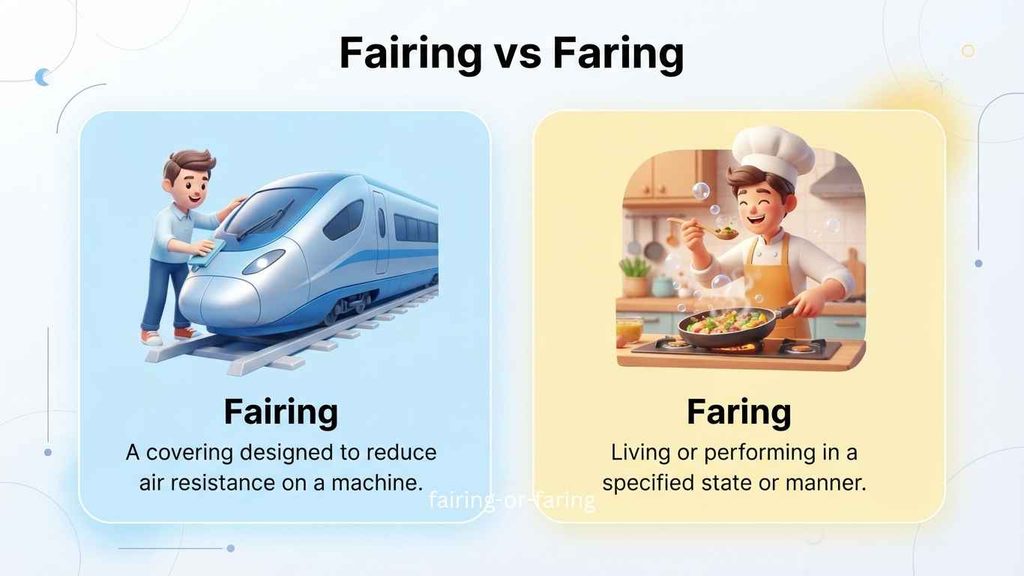
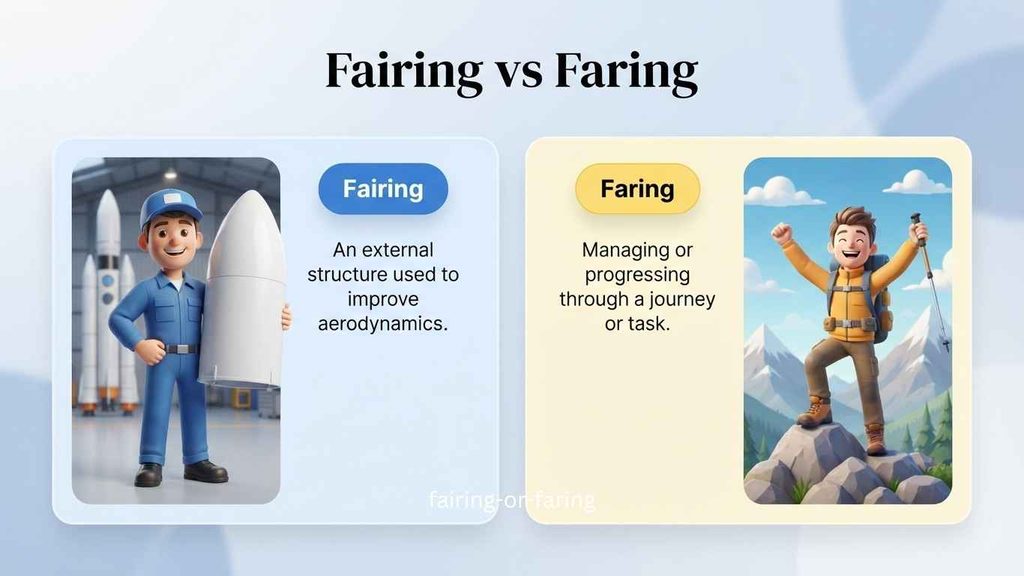
Ever paused mid-sentence, unsure if it’s fairing or faring, and hit send anyway hoping nobody notices? You’re not alone. This tiny mix-up trips up confident writers all the time, and spellcheck rarely saves you.
This guide breaks down the real meaning behind fairing or faring, with clear examples, simple comparisons, and tips you’ll actually remember. You’ll learn exactly when faring fits a sentence, when fairing belongs somewhere else entirely, and how to stop second-guessing yourself for good. Keep reading the confusion ends here.
How are you faring or fairing? Which is correct?
Getting fairing or faring wrong in a message can feel small, but it quietly changes what you’re actually asking someone. Here’s the part most people never learn in school.
What Does “How Are You Faring” Really Mean?
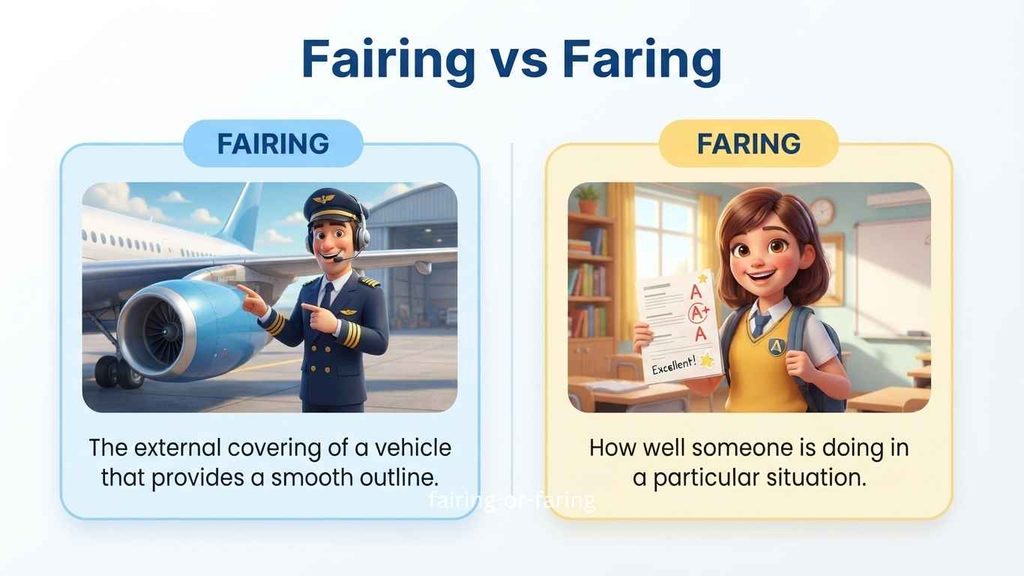
“How are you faring” is a well-being question. It asks how someone is progressing, coping, or holding up at work, in life, or through a tough season. “Fairing,” on the other hand, has nothing to do with people at all.
- Faring describes how someone is doing, coping, or progressing.
- Fairing describes a physical part on a vehicle, boat, or aircraft.
- Use “how are you faring” for health, work, or personal check-ins.
- Never write “fairing on well” it’s grammatically wrong.
- Fairing relates to aerodynamics, drag reduction, and vehicle design.
- Think “progress” for faring and “part” for fairing.
- Spellcheck won’t catch this both are real words.
| Term | Correct Use | Example |
| Faring | People, progress, well-being | “How are you faring at your new job?” |
| Fairing | Vehicles, planes, aerodynamics | “The motorcycle’s fairing cracked in the crash.” |
Example in texting: Friend 1: Hey, how are you faring since the move? Friend 2: Honestly, better than I expected!
What’s the difference between ‘faring’ and ‘fairing’?
The gap between faring and fairing comes down to one simple rule: people fare, machines wear a fairing. Mixing the two is a classic homophone trap.
Are Faring and Fairing Homophones or Just Look-Alikes?
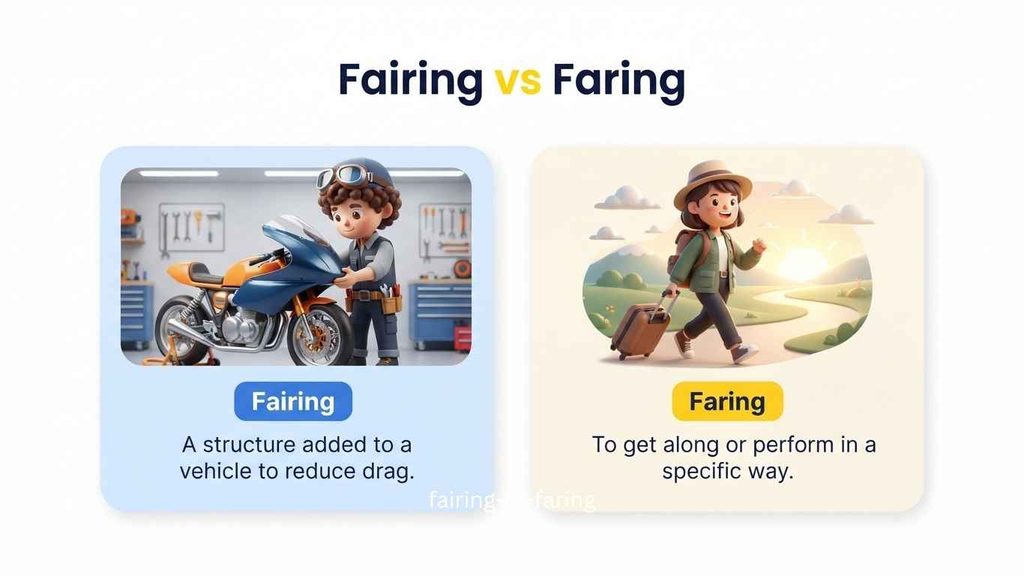
They’re close cousins in spelling but not quite true homophones the pronunciation differs slightly, which is exactly why the eye skips right past the error. Context is your best clue every time.
- Faring comes from the verb “to fare,” meaning to get along.
- Fairing comes from “fair,” a smooth curved aerodynamic covering.
- Use faring for emotions, careers, health, and daily life.
- Use fairing for cars, motorcycles, boats, planes, and rockets.
- Faring answers “how,” while fairing names a physical object.
- Swapping them changes meaning entirely, not just spelling.
- Neither word is “more correct” they’re just used differently.
| Faring | Fairing |
| Describes a person’s condition or progress | Names a vehicle’s aerodynamic shell |
| Used with “well,” “through,” “on,” “badly” | Used with “car,” “bike,” “plane,” “rocket” |
| Example: “She’s faring well after surgery.” | Example: “The fairing reduces wind drag.” |
Example in chat: Friend 1: Engineers are testing the new rocket fairing tomorrow. Friend 2: Cool totally different from asking how you’re faring, huh?
How Are You Faring or Fairing in Sentences?
When someone asks “how are you faring,” they’re really asking how you’re holding up right now not just today, but through whatever you’re currently dealing with.
How Is “How Are You Faring” Used in Everyday Conversations?
People lean on this phrase after a big change: a new job, a move, an illness, or a hard week. It signals genuine curiosity, not a throwaway greeting like “what’s up.”
- It shows genuine interest in someone’s situation or well-being.
- Works well after life changes moves, jobs, breakups, illness.
- Sounds warmer and more specific than “how are you.”
- Pairs naturally with “well,” “badly,” “okay,” or “through it.”
- Common in emails, check-ins, and thoughtful conversations.
- Avoid pairing it with “fairing” that’s the wrong word entirely.
Example in texting: Friend 1: How are you faring with the new schedule? Friend 2: Rough first week, but I’m adjusting.
Faring Better
Saying someone is “faring better” means their situation, health, or performance has improved compared to before it’s a comparison word doing a lot of quiet work.
What Does “Faring Better” Mean Compared to Other Phrases?
“Faring better” implies progress against a baseline, while “doing fine” is more static. It’s the phrase you reach for when change, not just condition, is the point of the sentence.
- “Faring better” always implies improvement over a past state.
- Common after setbacks: illness, layoffs, tough projects, or losses.
- Pairs naturally with “than expected” or “than last month.”
- Stronger and more specific than a plain “doing okay.”
- Works in both casual chats and formal updates.
- Never spelled “fairing better” that phrase doesn’t exist correctly.
- Great for progress reports, therapy talk, and recovery updates.
Example in chat: Friend 1: Is your dad faring better after the treatment? Friend 2: Yes, so much better than last week!
Fairing Well
“Fairing well” is one of the most common misspellings online the correct phrase is “faring well,” and the extra “i” completely changes what the sentence is about.
Why Do People Keep Writing “Fairing Well” Instead of “Faring Well”?
The words look nearly identical, and “fair” feels more familiar than “fare” to most readers. That familiarity is exactly what makes the mistake spread so fast across texts and posts.
- “Faring well” is the only grammatically correct spelling.
- “Fairing well” incorrectly borrows the vehicle-part spelling.
- The mix-up happens because “fair” is a more common word.
- Autocorrect often won’t flag it since both words exist.
- Teachers and editors flag this as a common usage error.
- Double-check emails and resumes where this mistake stands out.
- Reading the sentence aloud rarely catches the spelling issue.
| Correct | Incorrect |
| “She is faring well after the surgery.” | “She is fairing well after the surgery.” |
| “The company is faring well this quarter.” | “The company is fairing well this quarter.” |
Example in texting: Friend 1: Heard you switched teams how are you faring well with everyone? Friend 2: It’s just “faring well,” but yes, loving it!
What Does It Mean When Someone Asks How You’re Faring?
When a friend, coworker, or manager asks how you’re faring, they’re asking for an honest read on your situation not just a polite “good, you?” exchange in passing.
Is Asking “How Are You Faring” More Formal Than Casual?
It sits somewhere in between. It’s warmer than a business greeting but a bit more deliberate than “what’s up,” which makes it perfect for check-ins that matter.
- It invites a real answer, not a one-word reply.
- Common in workplace check-ins, HR emails, and mentorship talks.
- Shows the asker is paying attention to your circumstances.
- Fits well after stressful events deadlines, exams, health issues.
- Can be softened with “just checking in how are you faring?”
- Rarely used for strangers; it implies some existing relationship.
Example in chat: Friend 1: How are you faring with the layoffs at work? Friend 2: Stressful, but I’m staying hopeful.
Faring vs Fairing: A Quick Grammar Cheat Sheet
If you only remember one trick from this whole article, make it this: faring rhymes with “caring,” and both are about people. Fairing rhymes with “wearing,” a physical shell.
Is There an Easy Memory Trick for Faring vs Fairing?
Yes link “faring” to “fare,” like a bus fare or “farewell,” both tied to journeys and people. Link “fairing” to “fair” as in smooth and streamlined, like a race car’s shell.
- Remember: faring = people, fairing = parts.
- “Fare” relates to travel, journeys, and personal progress.
- “Fair” (in fairing) relates to smooth, streamlined shapes.
- If a sentence has a subject feeling something, use faring.
- If a sentence names a physical object, use fairing.
- Bookmark this page for the next time you freeze mid-text.
Example in texting: Friend 1: Still can’t remember which one faring or fairing? Friend 2: Faring = feelings, fairing = fenders. Easy.
Common Mistakes People Make With Faring and Fairing
Even careful writers slip here, mostly because both words are real, both are spelled correctly somewhere, and neither one trips a red squiggly line in most editors.
Why Doesn’t Spellcheck Catch the Faring or Fairing Mistake?
Spellcheck tools flag misspelled words, not misused ones. Since faring and fairing are both legitimate English words, the software has no way to know which meaning you intended.
- Writing “fairing on well” instead of “faring on well.”
- Using “fairing” to describe a person’s mood or health.
- Asking “how are you fairing” in casual texts by mistake.
- Confusing the two in resumes, reports, and formal emails.
- Assuming autocorrect will catch a meaning-based error it won’t.
- Skipping a second read-through before hitting send or publish.
Example in chat: Friend 1: I wrote “fairing well” in my email to my boss is that bad? Friend 2: Fix it fast it should be faring well.
Why Do People Confuse Faring and Fairing?
The confusion isn’t random both words trace back to old English roots, sound almost identical out loud, and rarely appear side by side, so nobody notices the mismatch.
Where Do “Faring” and “Fairing” Actually Come From?
Faring comes from the Old English “faran,” meaning to travel or get along. Fairing comes from “fair,” describing something smooth and evenly shaped think aerodynamic curves on a vehicle.
- Both words share Old English roots but different meanings.
- Faring links to “fare” travel, journeys, and outcomes.
- Fairing links to “fair” smooth, curved, evenly shaped.
- The one-letter difference hides a completely different word family.
- Regional accents make the spoken difference even harder to catch.
- Understanding the origin makes the spelling far easier to recall.
Example in texting: Friend 1: Wait, “faring” and “fairing” aren’t even related words? Friend 2: Nope totally different roots, just similar spelling.
Synonyms and Alternatives to “How Are You Faring”
If “how are you faring” starts to feel repetitive, there are plenty of natural alternatives that keep the same warm, caring tone without sounding stiff or repeated.
What Are Good Alternatives to “How Are You Faring”?
Casual settings call for looser phrasing, while formal emails benefit from something a bit more composed. Either way, the goal stays the same genuine interest in someone’s situation.
- “How’s it going?” casual, everyday check-in.
- “How are you holding up?” best for tough situations.
- “How’s everything on your end?” good for work emails.
- “How have you been coping?” direct, empathetic tone.
- “How’s life treating you?” friendly and conversational.
- “How are things progressing?” formal, project-related contexts.
Example in chat: Friend 1: How are you holding up after the move? Friend 2: Better every day, thanks for asking!
When Should You Use Fairing Instead of Faring?
Fairing belongs anywhere engineers, mechanics, or designers are talking about reducing drag motorcycles, race cars, boats, aircraft, and even rockets heading to space.
What Industries Use the Word “Fairing” Most Often?
Automotive, aerospace, and marine engineering rely on fairing constantly. It’s a technical term describing a structure that smooths airflow or water flow around a vehicle’s frame.
- Motorcycles: the plastic shell covering the front and engine.
- Race cars: aerodynamic panels that reduce wind resistance.
- Aircraft: smooth coverings that limit drag on wings and body.
- Boats: hull coverings that improve water flow and speed.
- Rockets: the nose cone protecting the payload during launch.
- Never use fairing when describing a person’s mood or health.
Example in texting: Friend 1: The bike’s fairing got scratched in the garage. Friend 2: Ouch that’s an easy part to replace though.
Examples of ‘Faring’ Used in a Sentence:
Seeing faring in real sentences is the fastest way to make the correct spelling stick so here’s a solid batch to reference whenever you’re unsure.
How Is Faring Used Across Different Everyday Situations?
From health updates to work check-ins, faring flexes across nearly every context involving progress or well-being, always paired with words like “well,” “badly,” “through,” or “on.”
- “How are you faring in your new city?”
- “She is faring well at her new job.”
- “The students are faring on their exams better than expected.”
- “They are faring through the challenges with determination.”
- “He is faring well after adopting a healthier lifestyle.”
- “How are you faring on the project deadline?”
- “The team is faring well despite tight schedules.”
- “She is faring well in balancing work and personal life.”
Example in chat: Friend 1: How’s your sister faring after the surgery? Friend 2: She’s faring so much better than we hoped.
How Are You Faring or Fairing
At this point, the answer should feel automatic: it’s always “how are you faring,” never “fairing.” One quick mental check before you type saves you the mix-up every time.
What’s the Fastest Way to Double-Check Faring vs Fairing?
Ask yourself if the sentence is about a person or a machine part. Person, feeling, progress, health that’s faring. Vehicle, drag, aerodynamics that’s fairing. No exceptions.
- Person or feeling involved? Use faring, always.
- Vehicle or physical part involved? Use fairing, always.
- Reread messages once before sending anything important.
- Save this cheat sheet for resumes, emails, and interviews.
- When unsure, swap in “doing” mentally that confirms faring.
- Practice with real sentences until the choice feels instinctive.
Example in texting: Friend 1: One more time is it faring or fairing for “how are you”? Friend 2: Faring. Always faring for people.
Frequently Asked Questions
Is it appropriate to ask someone “How are you faring”?
Yes. Asking “how are you faring” is polite and caring, and it shows genuine interest in someone’s well-being or progress.
What are common synonyms for “How are you faring”?
Alternatives include “how are you doing,” “how’s it going,” and “how are you holding up,” all with a similar faring-style meaning.
In what context can “I’m not faring well” be used?
You can say this when facing stress, illness, or setbacks it signals you aren’t faring well through a specific situation right now.
Is “fairing” ever correct when talking about people?
No. Fairing never applies to people; it strictly describes vehicle parts, so always use faring for personal well-being questions.
Does “faring” always need to be followed by a word like “well”?
Not always, but it’s common. Faring often pairs with “well,” “badly,” “through,” or “on” to complete its meaning clearly.
Can “fairing” be used as a verb like “faring” is?
Rarely. Fairing is mostly a noun describing an object, unlike faring, which functions as a present-participle verb form.
Why is the fairing or faring confusion so common online?
Because both spellings are valid English words, so spellcheck can’t catch it only understanding the meaning behind fairing or faring prevents the mistake.
Conclusion
Getting fairing or faring right really comes down to one simple question: are you talking about a person or a vehicle part? Faring covers people, progress, and well-being, while fairing belongs strictly to cars, planes, boats, and rockets. Once that distinction clicks, the confusion around fairing or faring disappears for good.
Next time you’re checking in on a friend, a coworker, or yourself, remember it’s always “how are you faring.” Save this guide, reread the examples if you ever freeze mid-sentence, and let this be the last time faring trips you up.

Amelia Brooks is a US-based author known for inspiring stories on meaning, growth, and hope, blending insight with simple, engaging storytelling.