
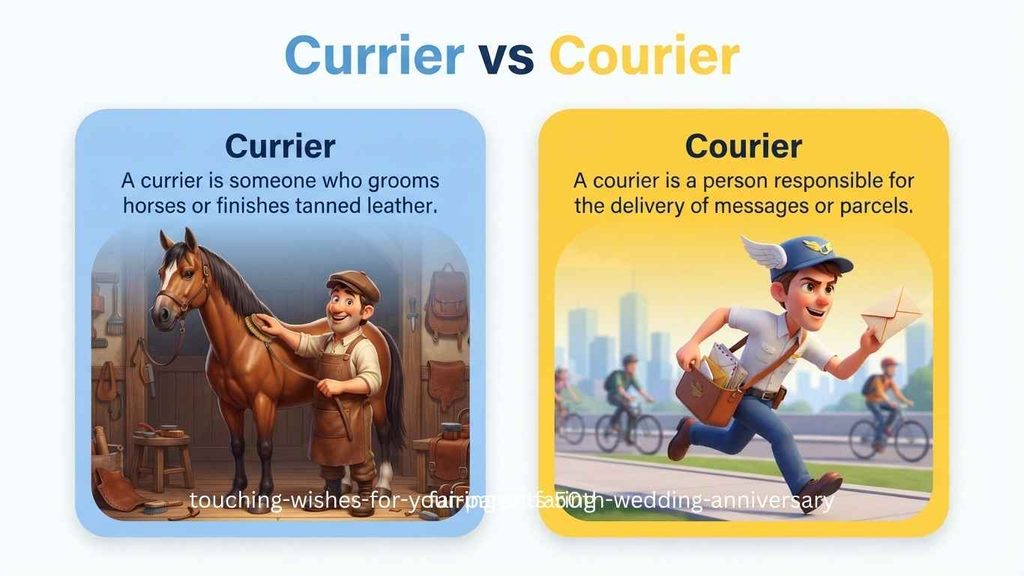
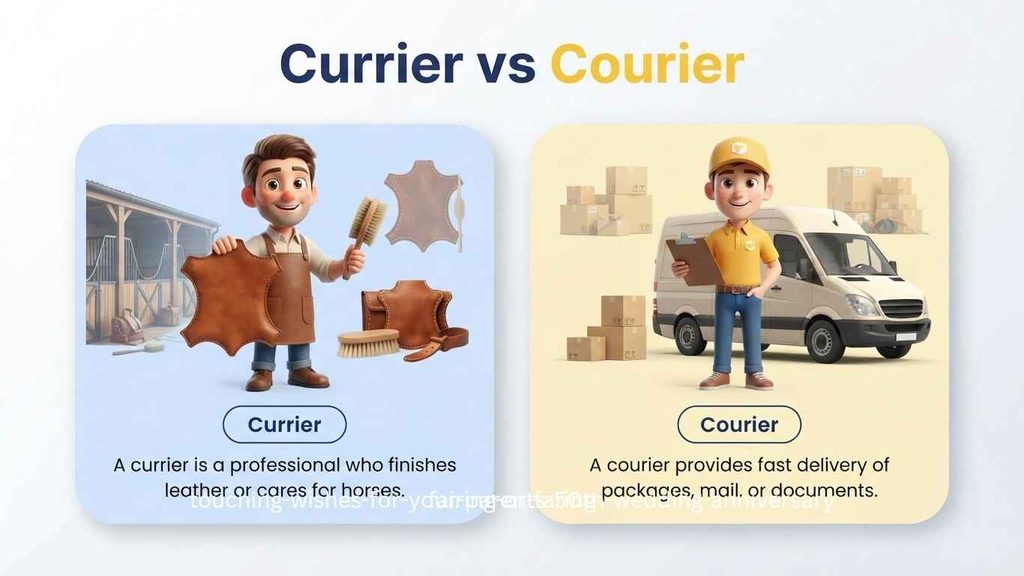
Ever typed a word that just felt off, even though spellcheck said nothing was wrong? That’s exactly what happens with currier vs courier two words that look almost identical but mean completely different things. One belongs in a leather workshop, the other belongs on your delivery driveway, and mixing them up in an email or resume can quietly undercut how professional you sound.
This guide breaks down everything you need to know about currier vs courier in plain, practical terms the meanings, the history, real example sentences, common slip-ups, and a few tricks to keep them straight for good. A courier and a currier are not interchangeable, and by the end of this article, you won’t have to think twice about which one belongs in your sentence.
Currier vs Courier: Key Differences at a Glance
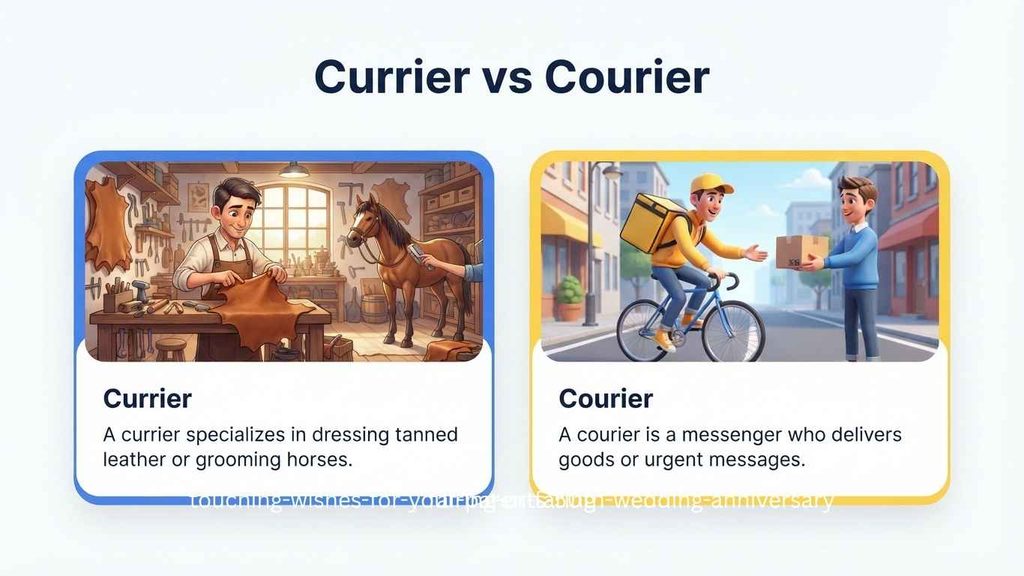
Before going deeper, here’s a quick side-by-side comparison so you can see the semantic gap between these two homophones instantly.
| Feature | Currier | Courier |
| Definition | A skilled tradesperson who dresses, softens, and finishes tanned leather | A person or delivery service that transports packages, documents, or goods |
| Industry | Leather manufacturing, tanning, craftsmanship | Logistics, shipping, business communication |
| Origin | Old French courroyer (“to curry leather”) | Old French courrier, from Italian corriere (“runner, messenger”) |
| Common Use Today | Rare, mostly historical or industry-specific | Extremely common in daily business and personal use |
| Related Terms | Currying, tannery, hide, leatherworker | Courier service, same-day delivery, parcel, dispatch rider |
| Example | “The currier softened the hide with oil.” | “The courier delivered the parcel by noon.” |
Notice how the two words share a sound but split entirely on meaning, industry, and usage frequency. That distinction is the whole reason currier vs courier confusion keeps popping up in writing.
Define Currier
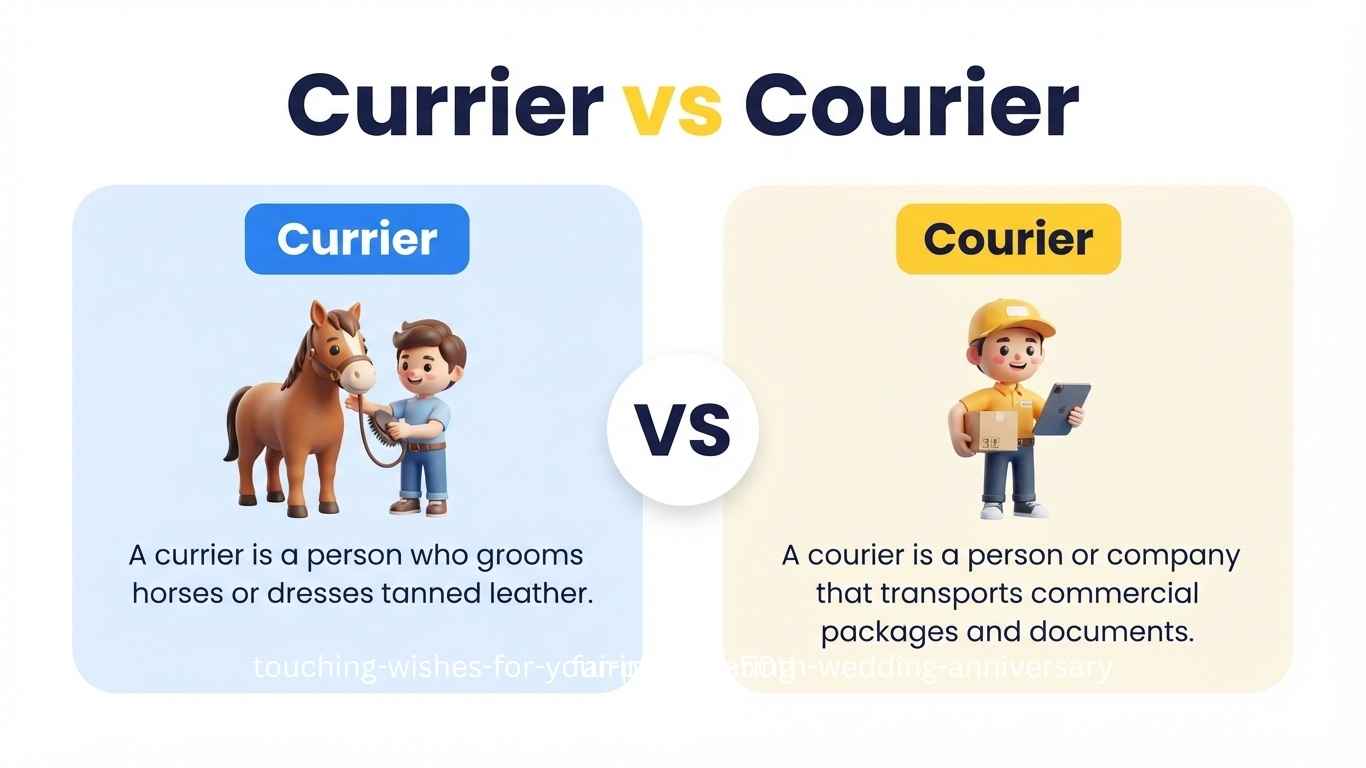
A currier is a specialized craftsperson in the leather industry someone who takes tanned hides and works them into supple, durable material ready for shoes, belts, saddles, and bags. This process, called currying, involves oiling, stretching, and finishing the leather so it holds up to daily wear.
- A currier works after the tanning stage, not before it.
- They use oils, waxes, and hand tools to soften hides.
- The role is closely tied to tanneries and leather manufacturing.
- Curriers were historically organized into their own trade guilds.
Today, the word currier is rare outside of historical texts, artisanal leather shops, and certain trade documents, but it still shows up often enough that mixing it up with courier is a genuinely common mistake.
Define Courier
A courier is a person or company responsible for transporting packages, documents, or goods quickly and securely from one location to another. Couriers are the backbone of modern logistics, handling everything from legal paperwork to same-day retail deliveries.
| Type of Courier | What They Handle |
| Same-day courier | Local deliveries completed within hours |
| International courier | Cross-border shipments and customs-cleared parcels |
| Medical courier | Time-sensitive lab samples and medical supplies |
| Business courier | Contracts, invoices, and legal documents |
| Bike courier | Fast urban deliveries in congested cities |
Couriers rely on vans, bikes, motorcycles, or even foot delivery depending on distance and urgency. Because courier services are woven into everyday business, this is the word you’ll encounter far more often when comparing currier vs courier.
Currier vs Courier: Where the Words Come From
Both words trace back to Old French, which is exactly why they sound so similar despite having unrelated meanings. Courier descends from courrier, tied to the Italian correre (“to run”), reflecting the idea of a swift messenger. Currier comes from courroyer, meaning “to curry” or dress leather a completely separate craft tradition.
Knowing this etymology makes the distinction easier to remember: a courier runs messages, while a currier cures leather. That one mental hook resolves most currier vs courier confusion on the spot.
How To Properly Use The Words In A Sentence
Getting currier vs courier right comes down to one simple filter: are you talking about leather, or are you talking about delivery? A currier belongs in sentences about hides and tanneries, while a courier belongs in sentences about shipping and logistics.
How To Use Currier In A Sentence
- “The currier spent hours softening the hide by hand.”
- “My grandfather trained as a currier before opening his own tannery.”
- “The workshop hired a new currier to keep up with leather orders.”
How To Use Courier In A Sentence
- “The courier arrived at the office right on schedule.”
- “We booked a courier to send the signed contract overnight.”
- “The courier company promised same-day delivery across the city.”
What Is the Easiest Way to Remember Currier vs Courier?
The fastest trick is linking each word to its industry through sound association. Courier contains “run” energy think of a runner rushing a message across town. Currier connects to “cure,” as in curing and softening leather. Once that association sticks, choosing correctly between currier vs courier becomes almost automatic, even under time pressure while writing quickly.
More Examples Of Currier & Courier Used In Sentences
Seeing extra examples side by side reinforces the pattern and makes the currier vs courier distinction feel natural rather than memorized.
Examples Of Using Currier In A Sentence
- The currier prepared the leather for high-quality shoes.
- My uncle was a skilled currier at a regional tannery.
- The currier applied oils to soften the leather effectively.
- She learned the trade of a currier from her father.
- The workshop hired a new currier to meet rising demand.
- A currier carefully stretched the hides to improve texture.
- The currier inspected each hide to remove imperfections.
- Old guild records mention several respected curriers by name.
- The apprentice watched the currier work patiently for hours.
- A skilled currier ensures leather stays flexible yet durable.
Examples Of Using Courier In A Sentence
- The courier delivered the package right on time.
- We hired a courier to send urgent legal paperwork.
- The courier company offers reliable same-day delivery options.
- She works full-time as a courier in a busy district.
- The courier transported medical samples safely to the lab.
- He sent the signed letter through a trusted courier.
- The courier used a van to manage multiple stops.
- A dependable courier ensures documents never arrive late.
- The courier obtained a signature confirming safe delivery.
- International shipments move efficiently through an experienced courier.
Which Word Fits Your Sentence A Quick Decision Table
| Ask Yourself | Use This Word |
| Am I talking about leather, hides, or tanning? | Currier |
| Am I talking about a package, parcel, or delivery? | Courier |
| Is the setting a workshop or tannery? | Currier |
| Is the setting a warehouse, office, or shipping company? | Courier |
| Am I discussing 18th–19th century trade guilds? | Currier (likely) |
| Am I discussing modern business logistics? | Courier (almost always) |
Common Mistakes To Avoid
Because the words rhyme and share several letters, currier vs courier mix-ups happen even to careful writers. Catching these patterns early keeps your writing sharp and prevents small errors from undermining a professional message.
Using “Currier” Instead Of “Courier”
This is the more frequent error, since courier is the far more common word in everyday writing. Typing “currier” when you mean a delivery service instantly confuses readers who expect a logistics term, not a leatherworking one.
Using “Courier” Instead Of “Currier”
Less common but still notable writers covering leather craftsmanship or historical trades sometimes default to “courier” out of habit. This swap misrepresents the profession entirely and weakens accuracy in specialized writing.
Not Knowing The Difference At All
Some writers aren’t aware currier exists as a separate word and assume “currier” is simply a misspelling of courier. Understanding both meanings prevents this assumption and strengthens overall vocabulary precision.
Tips To Avoid Mistakes
- Always confirm the topic leatherwork or delivery before choosing a word.
- Read the sentence aloud; context usually makes the correct choice obvious.
- Keep a quick mental note: courier “runs,” currier “cures.”
- Proofread industry-specific writing twice, since spellcheck won’t catch this error.
Context Matters
The meaning of currier vs courier shifts entirely based on situation, industry, and even time period. Recognizing context is the single most reliable way to choose correctly, more reliable than memorizing rules alone.
- Shipping and Logistics: In this setting, only courier applies. Businesses referencing delivery drivers, dispatch riders, or parcel services should never substitute currier, since doing so introduces confusion into otherwise clear business communication.
- Leatherworking: Here, currier is the correct and only appropriate term. Writers describing tanneries, hide preparation, or artisanal leather goods should use currier to maintain accuracy and craftsmanship credibility.
- Historical Writing: Older documents, especially from the 1700s–1800s, use currier to describe a respected trade profession, while courier described royal or military messengers. Context from the era usually makes the intended word obvious.
Exceptions To The Rules
A handful of situations complicate the otherwise simple currier vs courier rule, particularly around history, region, and specialized industries.
1. Historical Usage
Older texts sometimes use currier far more frequently than modern readers expect, since leatherworking guilds were historically significant trade organizations. Recognizing the time period helps confirm the intended meaning quickly.
2. Regional and Surname Differences
Both words occasionally appear as surnames (Currier and Currier-adjacent spellings exist as family names), which can create confusion in genealogical or historical writing unrelated to either profession or delivery service.
3. Industry-Specific Usage
Leather manufacturing companies still use currier internally as a job title, while logistics companies exclusively use courier. Professional writing within these industries should always match the established, expected terminology.
Are Currier and Courier Ever Used Interchangeably?
No despite the similar spelling, currier vs courier are never truly interchangeable in modern or historical English. Their meanings developed from separate word roots and describe entirely unrelated professions. Any apparent overlap comes only from sound, never from shared meaning, so writers should treat them as strictly distinct terms in every context.
Practice Exercises
Testing yourself is the fastest way to lock in the currier vs courier distinction permanently.
Exercise 1: Fill In The Blank
- The __________ delivered the urgent package to the client on time.
- My grandfather worked as a skilled __________ in a leather factory.
- We hired a __________ to transport important legal documents quickly.
- The __________ carefully prepared the leather for high-quality shoes.
Answer Key: 1. courier 2. currier 3. courier 4. currier
Exercise 2: Sentence Completion
- The __________ picked up the package from the post office early this morning.
- I had to hire a __________ to send the confidential documents to the client.
- The leather __________ ensured the hides were soft and durable for crafting.
- The __________ company specializes in delivering urgent medical supplies across the city.
Answer Key: 1. courier 2. courier 3. currier 4. courier
Currier vs Courier: Related Words Worth Knowing
Expanding your vocabulary around both terms makes the distinction even easier to retain long-term.
| Related to Currier | Related to Courier |
| Tanner, hide, leatherworker | Messenger, dispatch rider, delivery agent |
| Currying, tannery, craft guild | Parcel service, shipment, logistics |
| Leather dressing, finishing | Same-day delivery, freight, consignment |
Conclusion
Understanding currier vs courier comes down to one clear rule: a currier works with leather, while a courier delivers packages, documents, or goods. These words sound alike but describe completely different professions, and mixing them up even once can make writing look careless in a professional or business setting.
By reviewing the examples, practicing the exercises, and remembering that context always signals the correct choice, you’ll never second-guess currier vs courier again. Whether you’re writing about a tannery or a same-day courier service, precision in word choice reflects precision in thinking and that’s worth getting right every time.
FAQs
What is the difference between a currier and a courier?
A currier works with leather, softening and finishing hides, while a courier delivers packages or documents. The topic of your sentence determines which word applies.
Can I use currier instead of courier?
No. A currier refers strictly to leatherwork, never delivery. Substituting it for courier in shipping contexts creates confusion and reads as a spelling error.
How do I know when to use a courier?
Use courier whenever you’re describing delivery of parcels, letters, or goods. If leatherworking is the topic instead, currier is the correct word.
Are currier and courier interchangeable?
No, currier vs courier describes two unrelated professions with separate word origins. Interchanging them causes misunderstandings in both casual and professional writing.
Why do currier and courier sound so similar?
Both words trace back to Old French roots that evolved differently over centuries. The similarity is purely phonetic, not a sign of shared meaning between currier and courier.
Is “currier” a real word or just a misspelling?
Currier is a legitimate word describing a leatherworking trade, not a misspelling. It simply appears far less often than courier in modern everyday writing.
Which word is more common today currier or courier?
Courier is significantly more common, given how central delivery services are to modern business. Currier mostly appears in historical, artisanal, or trade-specific writing.

Amelia Brooks is a US-based author known for inspiring stories on meaning, growth, and hope, blending insight with simple, engaging storytelling.